



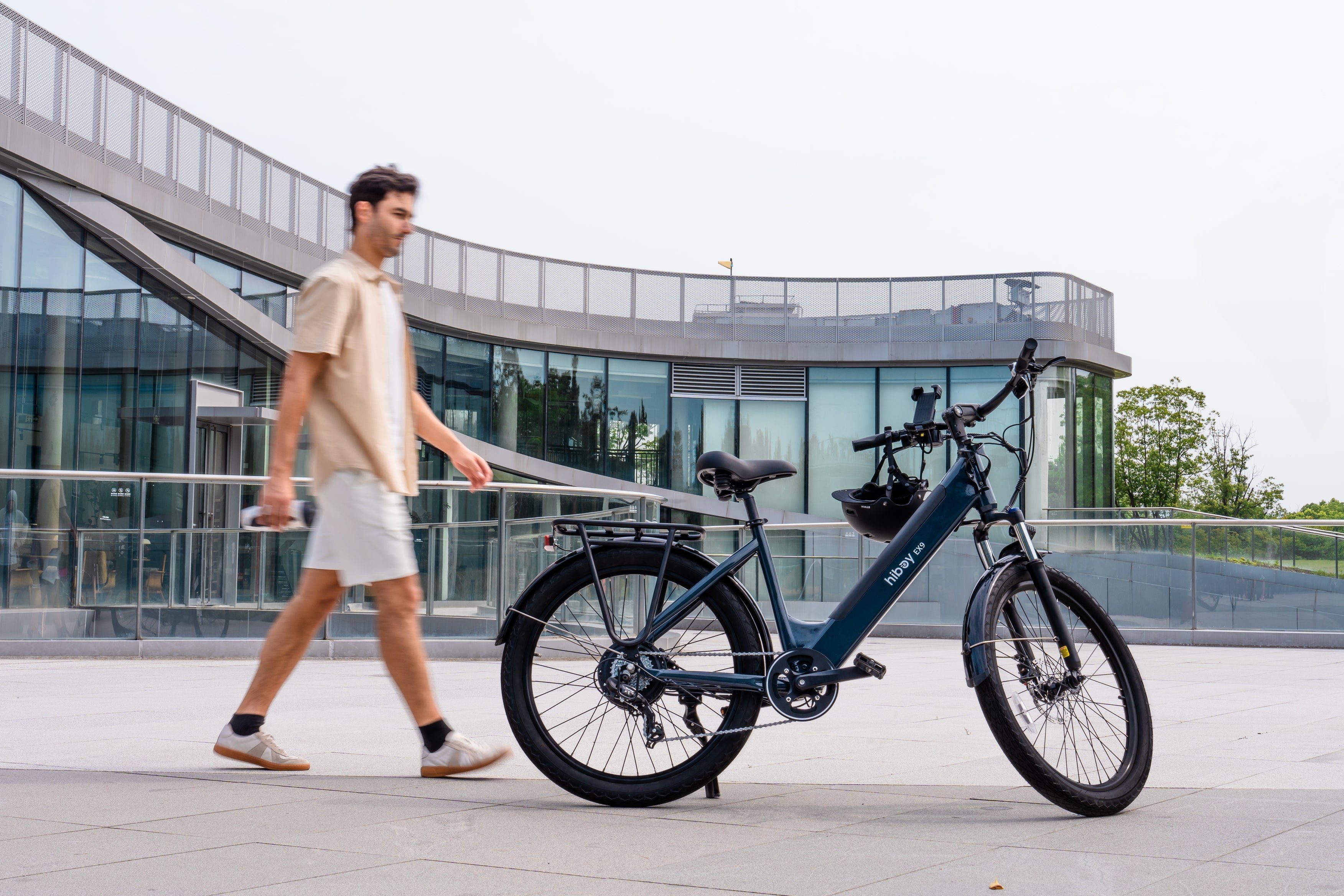
Les vélos électriques (ou VAE) révolutionnent les déplacements, et le Canada ne fait pas exception. Que ce soit pour vos trajets quotidiens à Toronto, vos explorations des sentiers de Vancouver ou vos balades sur les pistes cyclables de Montréal, les VAE offrent une combinaison ludique et pratique d'exercice, de commodité et d'assistance électrique.
Ce guide répond à la question essentielle : qu’est-ce qu’un vélo électrique exactement ? Il explique comment il fonctionne, pourquoi il est populaire au Canada, comment il est réglementé et quels sont les points à prendre en compte avant d’en acheter un.

Qu'est-ce qu'un vélo électrique ?
En résumé, un vélo électrique est un vélo équipé d'un moteur électrique et d'une batterie qui vous assiste au pédalage. Contrairement aux scooters ou motos électriques , le mode de propulsion principal reste le pédalage ; le système électrique amplifie votre effort, facilitant les montées et rendant les longs trajets moins fatigants.
Un vélo électrique permet aux cyclistes de :
- Pédalez avec l'assistance d'un moteur
- Accédez à la puissance électrique sans pédaler (sur certains modèles)
- Voyagez plus vite et plus loin qu'avec un vélo traditionnel
- Profitez du vélo avec moins d'effort physique
Types de vélos électriques au Canada
Les différents modèles de vélos électriques répondent à différents besoins. Ce tableau aide les cyclistes canadiens à déterminer rapidement le modèle qui correspond le mieux à leur style de vie.
| Type de vélo électrique | Idéal pour | Caractéristiques principales | Cas d'utilisation canadiens idéaux |
| Vélo électrique de ville | trajets quotidiens, trajets en ville | Cadre léger, moteur efficace, autonomie modérée | Déplacements urbains à Toronto, Vancouver et Montréal, avec pistes cyclables et routes pavées |
| Vélo électrique pliable | Appartements, usagers des transports en commun | Cadre pliable compact , rangement facile | Vie en copropriété, déplacements en transports en commun variés, espace de rangement limité |
| Vélo électrique à gros pneus | Conduite tout-terrain | Pneus larges , moteur puissant, stabilité accrue | Hivers enneigés, routes de gravier, sentiers, zones rurales |
| Vélo cargo électrique | Transporter des charges lourdes | Cadre allongé, capacité de charge élevée | Courses, enfants, équipement de travail, remplacement de voiture |
| VTT électrique (e-MTB) | Randonnée et conduite hors route | Suspension, moteur axé sur le couple | Sentiers, collines et aventures en plein air au Canada |
| Vélo électrique à cadre ouvert | Confort et accessibilité | Conception de cadre bas , position de conduite droite | Seniors, cyclistes occasionnels, trajets urbains avec arrêts et redémarrages fréquents |
Conseil aux cyclistes canadiens : Si vous prévoyez d'utiliser les pistes cyclables et les routes publiques, assurez-vous que votre vélo électrique répond aux normes canadiennes en matière de vélos à assistance électrique (VAE) (moteur ≤ 500 W et vitesse maximale assistée de 32 km/h).
Composants essentiels d'un vélo électrique
Les vélos électriques sont composés des mêmes pièces qu'un vélo classique : cadre, roues, freins, plus quelques composants électriques supplémentaires :
1. Batterie
La batterie est l'élément central du système électrique d'un vélo électrique. La plupart des vélos électriques modernes utilisent des batteries lithium-ion, à la fois légères et performantes. La capacité de la batterie (mesurée en wattheures, Wh) détermine l'autonomie, généralement de 40 à plus de 100 km selon le terrain, le niveau d'assistance et le poids du cycliste.
2. Moteur
Le moteur fournit l'assistance électrique. Il peut être situé à :
- Moyeu arrière (bonne traction)
- Moyeu avant (sensation d'équilibre)
- Transmission centrale / manivelle (efficacité et performances optimales en côte)
La puissance du moteur contribue à la force en montée et à l'accélération. Les cyclistes canadiens utilisent couramment des vélos équipés de moteurs de 250 à 750 W.
3. Contrôleur
Le contrôleur fait office de « cerveau », régulant la quantité d'énergie électrique qui circule de la batterie vers le moteur en fonction des commandes du cycliste.
4. Capteurs
La plupart des vélos électriques sont équipés de capteurs qui détectent la vitesse de pédalage (cadence) ou la force (couple), permettant ainsi au vélo de délivrer une puissance plus fluide et plus réactive.
5. Affichage et commandes
Monté sur le guidon, l'écran permet aux cyclistes de choisir les niveaux de puissance (Éco, Normal, Sport), de vérifier le niveau de la batterie et d'afficher la vitesse ou la distance.

Comment fonctionne un vélo électrique ?
Les vélos électriques fonctionnent en fournissant une assistance électrique au pédalage. Il existe deux modes principaux :
Assistance au pédalage (Pedalec)
Le moteur s'active uniquement lorsque vous pédalez, vous fournissant une assistance supplémentaire sans remplacer l'effort humain. C'est le type le plus courant et le plus légal au Canada.
Assistance à l'accélérateur
Certains vélos électriques permettent d'activer le moteur sans pédaler, comme une trottinette électrique de faible puissance. La réglementation concernant l'accélérateur varie selon les provinces.
Dans les deux cas, le moteur puise son énergie dans la batterie pour vous aider à accélérer ou à maintenir votre vitesse, réduisant ainsi la fatigue et augmentant la distance moyenne parcourue.
Comment les vélos électriques sont réglementés au Canada
Comprendre comment les vélos électriques sont classés au Canada est essentiel pour les utiliser en toute légalité.
Définition fédérale
Au Canada, un vélo à assistance électrique (VAE) doit répondre aux critères suivants :
- Les pédales doivent être fonctionnelles.
- Le moteur a une puissance ≤ 500 W
- La vitesse maximale assistée est de 32 km/h
- Elle porte une étiquette de conformité de sécurité
Si votre vélo électrique répond à ces normes, il n'est pas considéré comme un véhicule à moteur, ce qui signifie :
- Permis de conduire non requis
- Aucune immatriculation de véhicule requise
- Aucune assurance requise
- Il est impératif de respecter le code de la route relatif aux vélos (casque, règles de circulation).
Si un vélo électrique dépasse ces limites, avec une puissance ou une vitesse plus élevée, il peut être classé comme cyclomoteur ou véhicule à assistance motorisée dans certaines provinces, ce qui peut entraîner des exigences en matière de permis et d'immatriculation.

Variations provinciales
Bien que la définition fédérale établisse le cadre de référence, les provinces peuvent ajouter leurs propres règles :
Ontario et Colombie-Britannique
- Âge minimum : 16 ans et plus (pour la plupart des vélos électriques)
- Le port du casque est obligatoire.
- Classés comme bicyclettes s'ils répondent aux normes fédérales PAB
Québec
- Les vélos électriques conformes aux spécifications PAB sont légaux sans permis.
- Les modèles équipés d'une manette des gaz ou d'une puissance supérieure peuvent nécessiter une licence/un enregistrement supplémentaire.
Alberta, Manitoba, Nouvelle-Écosse
- Règles similaires : port du casque obligatoire, pas de permis pour les PAB conformes.
- Vérifiez toujours la réglementation en vigueur dans votre province avant de conduire.
Pourquoi les vélos électriques sont-ils populaires au Canada ?
Le vélo électrique a connu un essor fulgurant au Canada pour de bonnes raisons :
- Idéal pour les déplacements domicile-travail : les vélos électriques permettent d’éviter les embouteillages, les files d’attente dans les transports en commun et les problèmes de stationnement, notamment dans des villes comme Toronto, Vancouver et Montréal.
- Respectueux de l'environnement : Ils ne produisent aucune émission lors de leur utilisation, contribuant ainsi à réduire votre empreinte carbone.
- Accessible à tous les niveaux de forme physique : l’assistance électrique facilite les longs trajets et les montées pour les cyclistes de tous âges et de tous niveaux de forme physique.
- Rentable : comparés à la possession d'une voiture ou aux trajets domicile-travail en covoiturage, les vélos électriques sont économiques sur le long terme.
- Modes de vie actifs : les vélos électriques encouragent une activité physique plus fréquente et agréable en plein air, sans les contraintes physiques du vélo traditionnel.
Tendances du marché des vélos électriques au Canada
Le marché canadien du vélo électrique a connu une croissance rapide. Des études récentes du secteur montrent que :
- Le marché était évalué à environ 33,76 millions de dollars américains en 2024.
- On prévoit une croissance annuelle composée de 20,6 % , ce qui devrait presque tripler de taille d'ici 2029.
Cette forte augmentation reflète l'intérêt croissant des consommateurs, le développement des infrastructures cyclables et l'acceptation accrue des vélos électriques comme moyen de transport quotidien.

Soutien et incitations gouvernementales
Bien qu'il n'existe pas encore de programme fédéral de rabais national pour les vélos électriques, plusieurs provinces et territoires offrent des incitatifs :
- Colombie-Britannique : Jusqu’à environ 1 400 $ de rabais grâce aux rabais sur les vélos électriques basés sur le revenu
- Alberta : Remboursement de 500 $ via le programme SCRAP-IT
- Yukon : Jusqu’à 750 $ de rabais sur l’achat de vélos électriques (plus élevé pour les modèles cargo)
- Île-du-Prince-Édouard : Remise de 500 $ sur les vélos électriques admissibles
Certaines municipalités proposent également des programmes pilotes de rabais, il est donc conseillé de se renseigner auprès des services locaux des transports ou du développement durable avant d'acheter.
Les remises peuvent réduire considérablement les dépenses à la charge du consommateur et rendre les vélos électriques de qualité plus accessibles.
Des avantages qui vont au-delà des bases
Les vélos électriques offrent des avantages qui vont au-delà de la vitesse et de la commodité :
- Réduction de l'effort physique : l'assistance au pédalage permet aux cyclistes de parcourir de plus longues distances sans s'épuiser.
- Technologie intégrée : De nombreux vélos électriques sont équipés d’écrans numériques, d’affichages de données de conduite et de modes d’assistance personnalisables.
- Entretien réduit : comparés aux voitures, les vélos électriques comportent moins de pièces mécaniques à entretenir.
- Utilisation multi-saisonnière : Les vélos électriques peuvent être utilisés pendant les intersaisons (printemps/automne) et, avec des pneus appropriés, toute l'année dans certaines régions canadiennes.
Ce que les acheteurs de vélos électriques au Canada doivent prendre en compte pour la première fois

L’achat de votre premier vélo électrique est une expérience excitante, mais une bonne préparation est essentielle. Utilisez cette liste de vérification pour faire un choix éclairé.
🚴 Conformité légale
☐ Puissance du moteur 500 W ou moins
☐ Vitesse maximale assistée : 32 km/h
☐ Pédales fonctionnelles
☐ Conforme à la réglementation canadienne sur les PAB
☐ Le port du casque est obligatoire (dans la plupart des provinces).
🔋 Batterie et autonomie
☐ Besoins quotidiens en distance (trajet domicile-travail + courses)
☐ Capacité de la batterie (plus grande = plus grande autonomie)
☐ Accès à la recharge à l'intérieur (appartement vs maison)
☐ Batterie amovible pour plus de commodité
⚡ Moteur et performances
☐ Considérations relatives au terrain (plat ou vallonné)
☐ Style de conduite (loisirs vs. trajets domicile-travail)
☐ Préférence pour l'assistance au pédalage ou l'accélérateur
☐ Accélération fluide et niveau sonore modéré
🛠 Confort et ajustement
☐ Taille du cadre adaptée à votre taille
☐ Cadre ouvert ou traditionnel
☐ Guidon et selle réglables
☐ Suspension ou pneus plus larges pour les routes accidentées
🌦 Préparation aux conditions météorologiques canadiennes
☐ Garde-boue pour la pluie et la neige fondue
☐ Pneus toutes saisons ou anti-crevaison
☐ Feux avant et arrière puissants
☐ Composants résistants aux intempéries
🔐 Sécurité et accessoires
☐ Antivol de haute qualité (antivol en U ou câble antivol)
☐ Solutions de rangement (sacoche ou panier)
☐ Support de téléphone pour la navigation
☐ Pompe de gonflage de pneus pour les urgences
💰 Budget et incitations
☐ Vérifiez les rabais provinciaux ou municipaux
☐ Comparez les soldes des fêtes et des saisons
☐ Tenez compte des accessoires et de l'entretien
☐ Disponibilité de la garantie et du service à la clientèle au Canada
Dernier conseil pour les nouveaux motards
Si vous débutez avec les vélos électriques, privilégiez un moteur de puissance modérée, un cadre confortable et une batterie fiable plutôt que de rechercher la vitesse maximale. Un vélo électrique bien équilibré offre une expérience optimale sur le long terme, notamment pour une utilisation quotidienne au Canada.
Réflexions finales
Un vélo électrique est un vélo de tous les jours équipé de composants électriques intelligents qui rendent le cyclisme plus facile, plus écologique et plus agréable. Au Canada, les vélos électriques révolutionnent les déplacements domicile-travail et les loisirs, grâce à des infrastructures en constante évolution, des incitatifs provinciaux et un marché en pleine expansion.
Que vous souhaitiez éviter les embouteillages, rouler plus longtemps sans vous épuiser ou simplement profiter plus souvent du plein air, un vélo électrique peut constituer un investissement rentable pour les cyclistes de tous âges et de tous niveaux d'expérience.
Vous vous demandez comment les vélos électriques se comparent aux trottinettes électriques ? Ou vous avez besoin d’aide pour choisir votre premier engin ? Nous sommes là pour vous aider ! N’hésitez pas à nous contacter !






Partager:
Combien coûtent les vélos électriques au Canada ? (Guide des prix 2025)
Améliorez chaque trajet : Accessoires Hiboy indispensables pour trottinettes et vélos électriques