



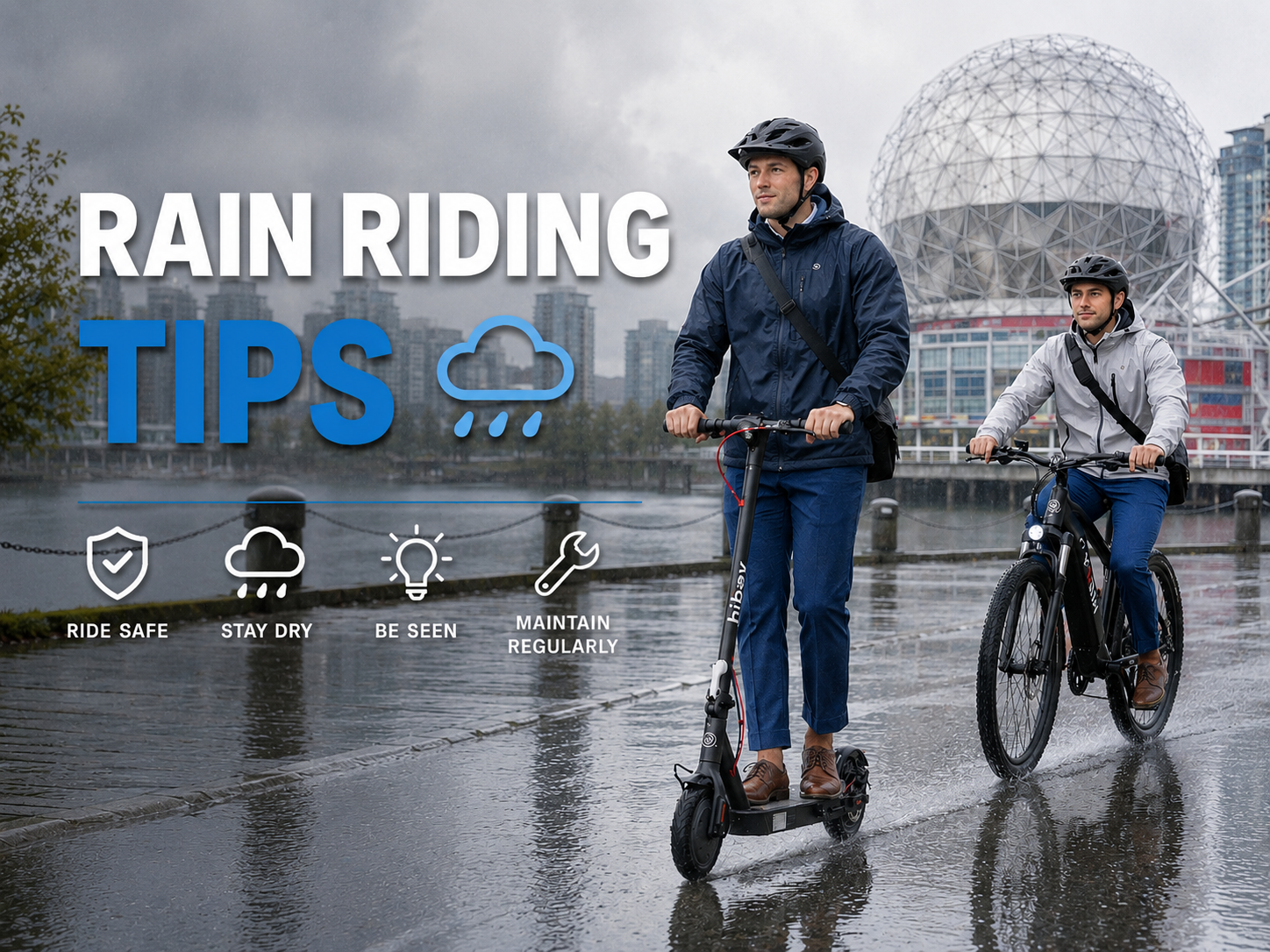
Vancouver riders know that rain is not an occasional inconvenience, it is part of everyday life for much of the year. From light drizzle and misty mornings to heavier seasonal rainfall, wet roads can quickly change riding conditions for eBike and eScooter users.
Rain does not automatically mean you need to stop riding. Modern electric bikes and scooters are designed to handle a range of weather conditions, but riding safely in wet environments requires adjustments in technique, preparation, and equipment.
This guide covers practical, expert-backed rain riding tips for Vancouver commuters and recreational riders, helping you stay safer, more visible, and more confident when the weather turns wet.
Why Riding in Rain Requires Different Habits
Rain changes much more than simply making the road wet. It affects traction, visibility, braking performance, and even how your eBike or eScooter responds to steering inputs. Riding in rainy conditions requires a more cautious and deliberate approach than riding on dry pavement.
Wet conditions can affect nearly every part of your ride, including:
- Reduced tire traction
- Longer braking distances
- Lower visibility for both riders and drivers
- Slippery road hazards
- Increased wear on components
Even experienced riders sometimes underestimate how quickly road conditions can change once rain begins. Small actions that feel normal on a dry day — quick turns, sudden braking, or rapid acceleration — may become less predictable on wet roads.
One important fact many riders overlook:
The first 15–30 minutes after rainfall begins can sometimes create the most slippery riding conditions. Oil residue, dust, dirt, and road debris mix with rainwater before being fully washed away, creating a thin slick layer on the pavement that reduces grip significantly.
Because of this, riders should slow down, increase following distance, and avoid sudden movements whenever rain starts falling.
Check Weather Conditions Before Leaving
Vancouver weather is known for changing quickly throughout the day. A ride that begins under clear skies can easily turn into a wet commute by the afternoon or evening.
Before heading out, take a few moments to check:
- Hourly rain forecasts
- Wind speed and direction
- Heavy rainfall or storm alerts
- Temperature changes
- Sunset times during shorter winter days
Wind conditions deserve particular attention. Strong crosswinds combined with wet roads can affect balance and steering control, especially on lighter eScooters.
If weather conditions include:
- Heavy downpours
- Strong wind gusts
- Reduced visibility
- Flooded streets
consider delaying your ride or choosing alternative transportation.
A quick weather check takes only a minute and can help prevent an uncomfortable or potentially unsafe ride.
Inspect Your Tires Before Every Wet Ride
Tires are the only point of contact between your vehicle and the road, making them especially important in rainy conditions. Worn or improperly maintained tires can significantly reduce grip and handling performance.
Before riding, inspect the following:
Check tire pressure
Overinflated tires can reduce the contact area between the tire and the road surface, potentially decreasing traction on wet pavement.
Rather than assuming higher pressure improves performance, follow the manufacturer’s recommended pressure range for your specific eBike or eScooter.
Inspect tread condition
Look for signs such as:
- Excessive wear
- Cracks or aging rubber
- Embedded debris
- Uneven tread patterns
Healthy tread channels help move water away from the tire surface, allowing better road contact and reducing the likelihood of slipping.
Making tire checks part of your routine can take only a few minutes but may significantly improve control and confidence during wet-weather riding.
Reduce Speed and Increase Following Distance
One of the most common mistakes riders make in wet weather is continuing to ride as if road conditions have not changed. Rain reduces traction and increases stopping distance, meaning actions that feel normal on dry pavement may become less predictable on wet roads.
When riding in rainy conditions:
- Reduce your speed
- Begin braking earlier
- Leave more space between yourself and other vehicles
- Anticipate traffic movements sooner
- Approach turns and intersections more cautiously
A useful rule of thumb is to increase your normal following distance by 50–100% when roads are wet. This additional space provides more time to react if vehicles ahead brake suddenly or unexpected obstacles appear.
Avoid rapid acceleration as well. Sudden bursts of power can cause wheels to spin or lose grip, particularly when starting from intersections or riding over smooth surfaces.
Smooth and controlled riding inputs become much more important in rain. Gentle steering, gradual acceleration, and consistent speed changes help maintain stability and control.
Brake Gradually Instead of Abruptly
Wet pavement provides less grip than dry pavement, making aggressive braking one of the quickest ways to lose traction. Braking habits that feel safe in normal conditions may need adjustment during rainy rides.
For safer braking:
- Begin slowing down earlier than usual
- Apply brakes progressively rather than suddenly
- Avoid grabbing brake levers aggressively
- Keep your body balanced and stable
- Allow extra room for stopping
For eBike riders:
Use both front and rear brakes together in a controlled and balanced manner. Relying too heavily on one brake can reduce stability, especially on wet surfaces.
For eScooter riders:
Maintain a stable riding posture and avoid leaning excessively forward when slowing down, as sudden weight shifts can affect balance and control.
Remember that stopping distances can increase significantly on wet roads. Even if your vehicle uses advanced braking systems, traction limitations still apply.
Watch for Vancouver's Common Wet-Road Hazards
Not all wet surfaces behave the same way. Some road materials become significantly more slippery than regular pavement and can increase the risk of skidding.
Pay extra attention around the following hazards:
Painted road markings
Crosswalks, bike lane markings, arrows, and painted traffic symbols often become surprisingly slick when wet. Ride across them carefully and avoid sharp turns or sudden braking while crossing painted surfaces.
Metal surfaces
Metal surfaces provide less traction in rainy conditions and should be approached carefully.
Avoid sudden steering inputs when riding over:
- Manhole covers
- Steel utility plates
- Train or streetcar tracks
- Bridge joints
- Drain covers
If possible, cross tracks and metal surfaces at a straighter angle to maintain better stability.
Fallen leaves
During Vancouver's fall and rainy seasons, wet leaves can create a slippery layer similar to ice. They may also hide cracks, potholes, or uneven pavement beneath them.
Puddles and standing water
Standing water can hide unexpected hazards such as:
- Deep potholes
- Road debris
- Uneven surfaces
- Drain openings
If you cannot accurately judge the depth of a puddle, avoid riding through it. Taking a slightly different route is often safer than risking a hidden obstacle.
Make Visibility a Priority
Rain reduces visibility for everyone on the road, not only for riders. Drivers may have more difficulty noticing eBike and eScooter riders during wet conditions, especially in busy urban environments.
Drivers often face challenges such as:
- Fogged windows
- Reflections from wet roads
- Reduced contrast in overcast weather
- Water spray from surrounding traffic
Because of this, making yourself easier to see should become a priority.
Increase visibility by using:
Front and rear lights
Turn on lights even during daytime rain. Overcast skies and road spray can make riders less noticeable than expected.
Reflective gear
Helpful visibility options include:
- Reflective jackets
- Helmet decals
- Reflective backpacks
- Reflective ankle straps
- Reflective accessories on bags or clothing
Bright-colored clothing
Dark clothing can blend into rainy surroundings and make riders harder to notice. Bright colors and high-visibility materials help improve contrast against gray skies and wet roads.
In rainy conditions, visibility is not only about helping you see better, it is equally important to help others see you sooner.
Wear Rain Gear Designed for Riding
Staying dry during wet-weather rides is not only about comfort, it also affects concentration, control, and overall safety. Clothing that becomes soaked can feel heavier, restrict movement, and make riders colder over time, especially during Vancouver's long rainy seasons.
Choosing gear specifically designed for riding can help improve comfort and maintain better control on the road.
Useful gear for Vancouver riders includes:
Waterproof jacket
A quality riding jacket can help keep water out while allowing body heat and moisture to escape.
Look for features such as:
- Breathable materials
- Adjustable cuffs and hems
- Longer rear coverage for riding posture
- Sealed zippers or water-resistant construction
- Reflective details for visibility
Waterproof gloves
Wet hands can quickly become cold and uncomfortable, reducing grip and control during longer rides.
Good riding gloves can help:
- Maintain handlebar grip
- Improve comfort in lower temperatures
- Reduce hand fatigue during wet commutes
Water-resistant footwear
Dry feet contribute more to riding stability than many people realize. Wet shoes can become slippery and uncomfortable, especially during longer trips.
Choose footwear that provides:
- Good traction
- Water resistance
- Secure footing on pedals or scooter decks
Helmet with visor or cap
Rain on eyewear or directly in your eyes can reduce visibility and become distracting.
A helmet visor or cycling cap can help:
- Keep rain out of your field of vision
- Reduce glare from wet roads
- Improve comfort during longer rides
Protect Your Battery and Electronics
Many modern eBikes and eScooters are designed with water-resistant components, but water resistance does not mean completely waterproof. Riding in light rain is typically manageable, while prolonged exposure to heavy water conditions can create unnecessary wear.
Follow these best practices during wet-weather riding:
- Avoid riding through deep water
- Keep charging ports protected and dry
- Wipe moisture from battery contacts if accessible
- Store your vehicle indoors whenever possible
- Avoid prolonged exposure to heavy rainfall
After completing a wet ride:
- Dry exposed surfaces with a clean cloth
- Remove mud, dirt, or debris
- Inspect cables and connectors for moisture buildup
- Allow components to fully dry before charging
Avoid using high-pressure water sprays or pressure washers around batteries, displays, charging ports, or electrical components, as water can be forced into areas designed only for normal weather exposure.
Perform Post-Ride Maintenance
Rainy conditions often introduce additional dirt, moisture, and road contaminants that can accelerate wear over time. Regular maintenance becomes particularly important during Vancouver's wet seasons.
Wipe down your ride
After riding, remove moisture and road buildup from surfaces such as:
- Dirt
- Road salt
- Mud
- Moisture residue
- Sand or small debris
Cleaning your vehicle after wet rides can help reduce corrosion and preserve component life.
Clean and lubricate moving parts
For eBikes:
- Clean chains regularly
- Remove dirt buildup from drivetrains
- Apply an appropriate chain lubricant after cleaning
For eScooters:
- Inspect folding mechanisms and moving joints
- Ensure hinges and locking components remain clean and secure
Check brakes frequently
Wet riding conditions can accelerate brake wear and affect performance over time.
Watch for signs such as:
- Squealing or unusual noises
- Reduced stopping power
- Delayed brake response
- Uneven braking feel
Routine inspections can help identify small issues before they become larger maintenance concerns.
Know When Not to Ride
Experience, preparation, and quality equipment can improve riding confidence, but weather conditions can occasionally exceed safe riding limits. Recognizing when conditions are too risky is an important part of responsible riding.
Consider postponing rides during:
- Severe storms
- Flooded roads
- Extremely strong winds
- Poor visibility conditions
- Near-freezing temperatures with wet roads
Heavy rain combined with strong wind can affect balance and reduce control, while standing water may hide potholes, debris, or uneven pavement. Poor visibility can also make it more difficult for drivers to notice eBike and eScooter riders.
Sometimes the safest decision is simply waiting for weather conditions to improve or choosing an alternative transportation option. A delayed trip is often a better choice than taking unnecessary risks in hazardous conditions.
Final Thoughts
Riding an eBike or eScooter in Vancouver's rainy climate is entirely possible and often becomes a normal part of daily commuting. The key difference between a stressful wet-weather ride and a confident one usually comes down to preparation and riding habits.
Lower speeds, smoother braking, better visibility, and routine maintenance can significantly improve safety and comfort.
Rain may be part of life in Vancouver, but with the right approach, it does not have to stop your ride.






Partager:
Electric Bike vs Public Transit Costs in Canada: Which Saves More in 2026?
Are eBikes Safer Than eScooters in Canada? A Real-World Rider Guide