



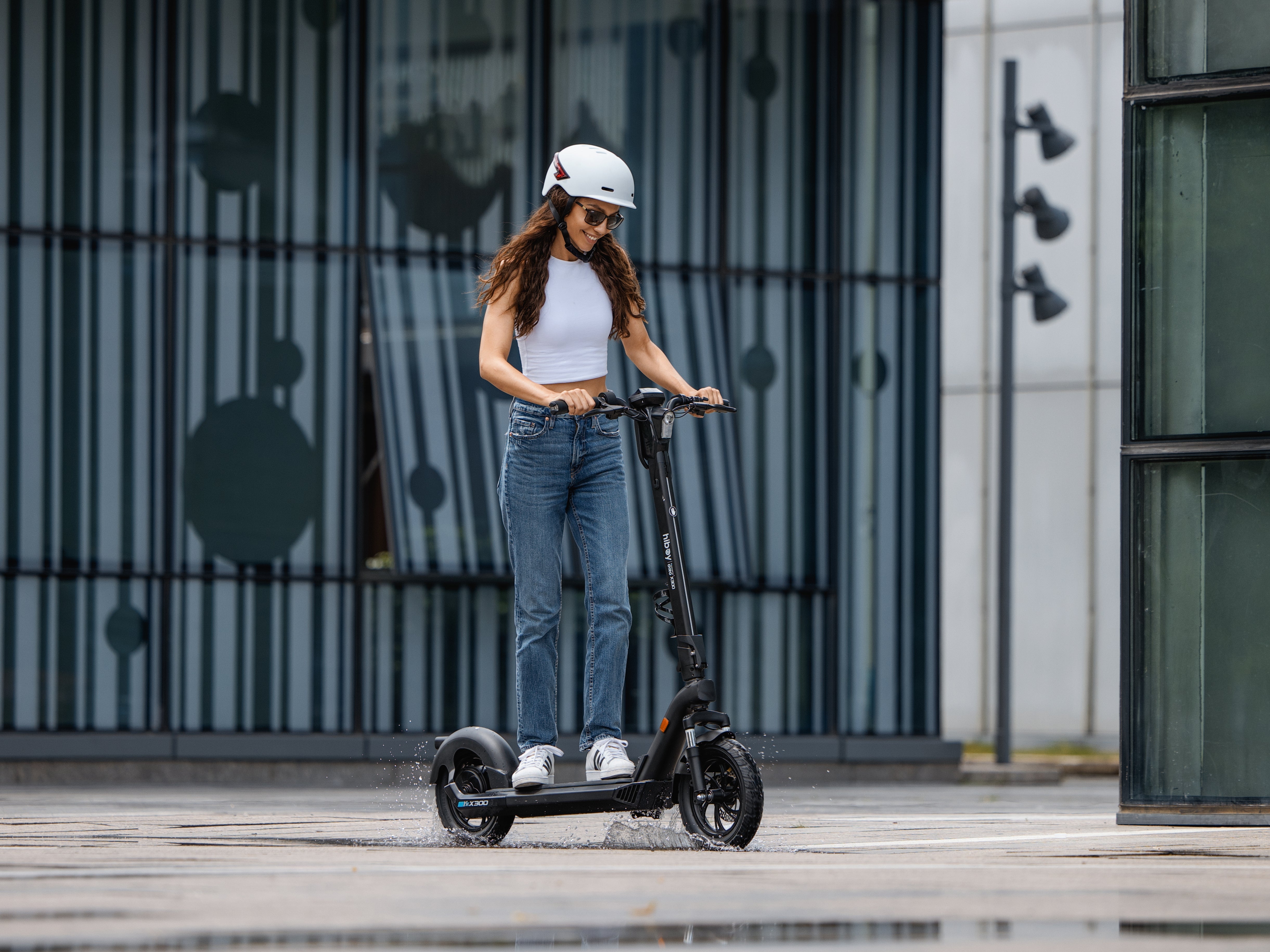
Electric scooters have become a practical transportation solution for Canadian commuters, students, and recreational riders alike. One of the most common questions prospective buyers ask is:
"How far can an electric scooter go on a single charge?"
The answer depends on several factors, including battery size, rider weight, terrain, weather conditions, riding habits, and the scooter model itself.
While some entry-level electric scooters may travel 20–30 km per charge, premium long-range models can exceed 80 km under ideal conditions. Understanding what affects range can help you choose the right scooter and maximize every ride.
In this guide, we'll explain how electric scooter range works, what impacts real-world performance, and how to get the most distance from every charge.
Understanding Electric Scooter Range
Electric scooter range refers to the maximum distance a scooter can travel on a fully charged battery before needing to be recharged.

Manufacturers typically provide an estimated maximum range based on controlled testing conditions, which often include:
- Flat terrain
- Moderate speeds
- Fully charged battery
- Average rider weight
- Mild temperatures
- Minimal stops and starts
In real-world Canadian riding conditions, actual range is often lower than the advertised figure because of hills, wind resistance, colder temperatures, traffic, and rider habits.
Average Electric Scooter Range by Category
Different scooter categories are designed for different purposes. Range varies significantly based on battery capacity and motor efficiency.
| Scooter Type | Typical Range |
| Entry-Level Commuter | 15–30 km |
| Standard Commuter | 25–50 km |
| Long-Range Commuter | 50–80 km |
| Premium Performance Scooter | 80–120+ km |
| Off-Road Electric Scooter | 50–100 km |
For most urban commuters in Canada, a scooter offering 30–50 km of real-world range is sufficient for daily travel.

What Determines Electric Scooter Range?
1. Battery Capacity
The battery is the single biggest factor affecting range.
Battery capacity is typically measured in watt-hours (Wh), which indicate how much energy the battery can store.
Generally speaking:
| Battery Capacity | Estimated Range |
| 250–350 Wh | 15–25 km |
| 400–600 Wh | 25–45 km |
| 700–1000 Wh | 45–80 km |
| 1000+ Wh | 80 km+ |
A larger battery stores more energy, allowing the scooter to travel farther between charges.
2. Rider Weight
The heavier the load, the harder the motor must work.
A rider weighing 100 kg will generally experience less range than a rider weighing 70 kg under identical riding conditions.
Typical Impact
| Rider Weight | Potential Range Reduction |
| Under 70 kg | Maximum range potential |
| 70–90 kg | Minor reduction |
| 90–110 kg | Moderate reduction |
| 110 kg+ | Significant reduction |
Additional cargo such as backpacks, groceries, or work equipment can also affect range.

3. Riding Speed
Speed has a major impact on battery consumption.
Many riders are surprised to learn that riding at maximum speed can dramatically reduce range.
| Riding Style | Battery Efficiency |
| Eco Mode | Highest |
| Moderate Cruising | High |
| Frequent Acceleration | Moderate |
| Full-Speed Riding | Lowest |
The faster you travel, the more energy is required to overcome air resistance and maintain speed.
4. Terrain and Hills
Flat roads allow the motor to operate efficiently, while hills demand significantly more power.
Terrain Comparison
| Terrain Type | Impact on Range |
| Flat Pavement | Minimal |
| Rolling Hills | Moderate |
| Steep Hills | Significant |
| Gravel Trails | Moderate to High |
| Off-Road Terrain | High |
Canadian cities such as Vancouver, Victoria, and parts of Montreal may present more elevation changes than flatter urban areas.

5. Temperature and Weather
Canada's climate can substantially affect battery performance.
Lithium-ion batteries perform best in moderate temperatures, generally between 15°C and 25°C.
Temperature Effects
| Temperature | Impact on Battery |
| 20°C | Optimal |
| 10°C | Minor reduction |
| 0°C | Noticeable reduction |
| Below -10°C | Significant reduction |
Cold weather temporarily decreases battery efficiency and available capacity, which can reduce range by 10–40% depending on conditions.
This is one reason riders often notice shorter rides during winter and early spring.
6. Tire Pressure
Underinflated tires create additional rolling resistance.
That means the motor must work harder to maintain speed, consuming more battery power.
Benefits of Proper Tire Inflation
- Improved range
- Better handling
- Enhanced ride comfort
- Reduced tire wear
- Increased safety
Checking tire pressure regularly is one of the easiest ways to maximize efficiency.

7. Wind Conditions
Strong headwinds increase aerodynamic drag and force the motor to use more energy.
On open roads, waterfront paths, or exposed bike lanes, windy conditions can noticeably reduce total range.
Tailwinds, on the other hand, can slightly improve efficiency.
Why Advertised Range and Real-World Range Differ
Many riders wonder why they cannot achieve the maximum range listed in product specifications.
The reason is simple: laboratory testing conditions rarely reflect everyday riding.
Example
A scooter rated for 60 km may achieve that distance under conditions such as:
- Rider weight of 70 kg
- Eco mode enabled
- Flat terrain
- Warm weather
- Constant speed
- No strong wind
In everyday use, the same scooter might realistically achieve:
- 40–55 km in mixed commuting conditions
- 35–50 km with frequent stops
- 30–45 km in cold weather
This is completely normal and applies across the industry.
How to Increase Electric Scooter Range
If you want to maximize the distance you can travel on each charge, these practices can make a noticeable difference.

Use Eco Mode
Eco mode limits power output and reduces energy consumption.
For many riders, this can increase range by 10–25%.
Accelerate Smoothly
Aggressive acceleration draws large amounts of power from the battery.
Gradual acceleration helps preserve energy throughout the ride.
Maintain Proper Tire Pressure
Check tire pressure regularly according to manufacturer recommendations.
Well-inflated tires reduce rolling resistance and improve efficiency.
Avoid Unnecessary Weight
Carrying extra cargo increases motor load and battery consumption.
Travel light whenever possible.
Charge and Store Batteries Properly
To maintain battery health:
- Avoid completely draining the battery frequently
- Use the recommended charger
- Store indoors during extreme cold
- Avoid prolonged exposure to direct sunlight
- Charge after rides when the battery has cooled
Healthy batteries maintain their performance longer and deliver more consistent range.
How Much Range Do Most Riders Actually Need?
Many first-time buyers assume they need the maximum range available.
In reality, daily commuting distances are often much shorter.
| Daily Round Trip | Recommended Scooter Range |
| Under 10 km | 20–30 km |
| 10–20 km | 30–50 km |
| 20–40 km | 50–70 km |
| 40 km+ | 70 km+ |
A good rule of thumb is to choose a scooter with an advertised range that is roughly double your typical daily travel distance.

This provides a comfortable buffer for weather, battery aging, detours, and unexpected trips.
Battery Range Over Time
Like all lithium-ion batteries, electric scooter batteries gradually lose capacity as they age.
Most quality batteries maintain strong performance for hundreds of charging cycles.
Typical Battery Lifespan
| Usage Stage | Expected Capacity |
| New | 100% |
| After 300–500 Cycles | 80–90% |
| After 500–1000 Cycles | 70–85% |
Proper charging habits and storage conditions can help extend battery life and preserve range for years.
Frequently Asked Questions
Can an electric scooter travel 100 km on one charge?
Yes. Some premium long-range electric scooters equipped with large battery packs can exceed 100 km under ideal conditions.
Does cold weather reduce electric scooter range?
Yes. Low temperatures reduce lithium-ion battery efficiency and can decrease available range, sometimes by 10–40% depending on conditions.
Is it bad to charge an electric scooter every day?
No. Frequent charging is normal. In fact, avoiding deep battery discharge can help maintain long-term battery health.

What is a good range for commuting?
For most Canadian commuters, a scooter capable of 30–50 km per charge offers sufficient range for daily transportation.
Final Thoughts
The distance an electric scooter can travel on one charge depends on much more than battery size alone. Rider weight, speed, terrain, weather, tire condition, and riding habits all influence real-world performance.
While advertised range figures provide a useful benchmark, understanding the factors that affect battery consumption will help you set realistic expectations and choose a scooter that matches your lifestyle.
For most Canadian riders, selecting a model with more range than you think you'll need provides greater flexibility, better long-term convenience, and peace of mind on every ride.
Whether you're commuting to work, exploring your city, or enjoying weekend adventures, maximizing battery efficiency helps ensure that every charge takes you farther.






Partager:
Are eBikes Good for Exercise? What Science and Real-World Experience Tell Us
Step-Through vs. Step-Over eBike: Pros, Cons, and Which Frame Fits Your Riding Style