



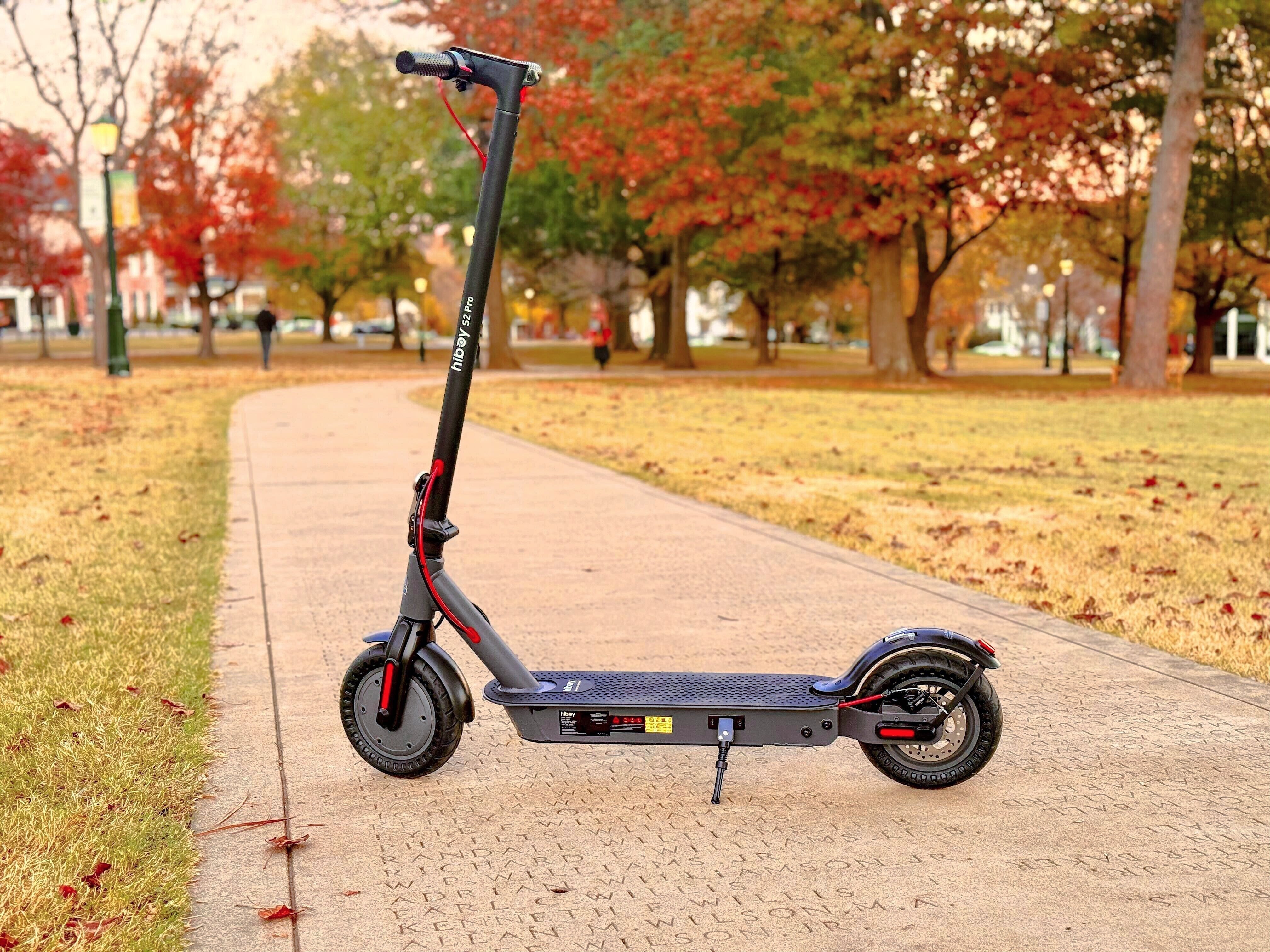
Fall can be one of the most enjoyable seasons for electric scooter riding in Canada. Cooler temperatures make commuting more comfortable, the summer crowds begin to thin, and changing leaves create a different atmosphere on city streets and recreational paths.
But autumn also introduces riding conditions that demand more attention.
Wet leaves can become surprisingly slippery. Rain can reduce traction and visibility. Cold temperatures can affect battery performance. Shorter daylight hours make lighting more important, while sudden temperature changes can create conditions that are very different from those you encountered during summer.
If you plan to keep riding your electric scooter through the Canadian fall, a little preparation can make a significant difference.
This guide explains how to prepare your scooter for wet leaves, rain, cold mornings, reduced daylight, and other common autumn conditions.
Why Fall Riding Requires Extra Preparation
An electric scooter performs differently when the environment changes.
During fall, riders may encounter:
- Wet or damp pavement
- Fallen leaves
- Mud and debris
- Lower temperatures
- Rain and mist
- Reduced daylight
- Frost or icy patches later in the season
- Stronger winds
- More frequent temperature fluctuations
None of these conditions automatically means you have to stop riding. However, they can affect traction, braking, battery performance, visibility, and overall control.

The key is to recognize the changing conditions and adjust both your scooter and riding habits accordingly.
1. Check Your Tires Before Fall Riding
Tires are your scooter's primary contact point with the road, so they deserve particular attention when conditions become wet.
Check Tire Pressure
Incorrect tire pressure can affect handling and ride quality.
Before riding, check your tire pressure against the manufacturer's recommended range.
Do not assume that the pressure you used during summer is still appropriate simply because the tires look normal.
Cold temperatures can cause tire pressure to change, so checking regularly throughout the season is a good habit.
Inspect for Wear
Look closely at the tire surface for:
- Excessive tread wear
- Cracks
- Cuts
- Punctures
- Embedded debris
- Uneven wear
Worn tires can provide less traction, which becomes more important when roads are wet.
If your tires are significantly worn or damaged, replace them before relying on the scooter for regular commuting.
2. Be Extremely Careful Around Wet Leaves
One of the biggest hazards of fall riding isn't necessarily rain itself.
It's wet leaves.
A layer of leaves can hide potholes, road markings, drain covers, gravel, and other obstacles. When wet, leaves can also create a slick surface that reduces tire grip.
How to Ride Over Wet Leaves
Whenever possible, avoid riding directly over large patches of wet leaves.
If you cannot avoid them:
- Slow down before reaching the leaves.
- Keep the scooter upright.
- Avoid sudden steering movements.
- Avoid hard braking while riding over them.
- Keep both hands firmly on the handlebars.
- Maintain a smooth and predictable speed.
Do not make abrupt turns simply because you see a patch of leaves ahead. Reduce your speed first, then steer around the hazard when it is safe to do so.

Why sudden braking is risky
When traction is reduced, aggressive braking can cause the tires to lose grip.
The safest approach is to anticipate the hazard and reduce speed before reaching it rather than waiting until you're already on the slippery surface.
3. Don't Assume a Familiar Route Is Still Safe
One of the biggest mistakes riders can make in autumn is assuming that a route they use every day will behave the same way.
A familiar bike lane or road can change considerably after:
- Heavy rain
- Leaf fall
- Construction
- Strong winds
- Temperature drops
- Overnight frost
For example, a section of pavement that was completely clear in August may be covered with wet leaves in October.
Make a habit of looking farther ahead and identifying changes in the road surface before you reach them.
4. Inspect Your Brakes
Wet conditions make reliable braking even more important.
Before fall riding, inspect your scooter's braking system and make sure it operates normally.
Depending on the scooter, this may include electronic, disc, drum, or other braking systems.
Pay attention to:
- Unusual noises
- Reduced braking response
- Excessive brake lever travel
- Vibration
- Delayed braking
- Visible component damage
If the braking performance feels different from normal, don't ignore it.
Have the system inspected or serviced according to the manufacturer's recommendations before continuing to ride.

5. Give Yourself More Braking Distance
Even if your brakes are working perfectly, wet conditions can affect how quickly you can stop.
That means your normal summer following distance may not be enough.
When riding on wet pavement:
Slow down and leave more space between yourself and other road users.
This gives you more time to react if a vehicle brakes suddenly, a pedestrian steps into your path, or the road surface becomes unexpectedly slippery.
You should be particularly cautious near:
- Intersections
- Crosswalks
- Downhill sections
- Bike-lane crossings
- Painted road markings
- Metal covers
- Drainage grates
- Wet leaves
6. Be Careful Around Painted Lines and Metal Surfaces
Wet leaves aren't the only slippery surfaces you'll encounter during fall.
Painted road markings can become more slippery when wet, particularly when you approach them at an angle.
Metal surfaces can also have reduced traction in wet conditions.
Watch for:
- Painted lane markings
- Manhole covers
- Drain grates
- Metal plates
- Railway crossings
- Smooth concrete
- Polished surfaces
Whenever possible, cross these surfaces as straight as practical and at a reduced speed.
Avoid aggressive braking or sharp steering while your tires are directly over them.

7. Protect Your Scooter From Rain and Water
Electric scooters contain electrical components and batteries that require appropriate care.
Before riding in wet weather, check the manufacturer's water-resistance specifications for your particular model.
Water-resistant does not mean waterproof.
Even if a scooter is designed to tolerate some exposure to water, that does not mean it should be ridden through deep puddles or submerged in water.
Avoid:
- Deep puddles
- Flooded roads
- Standing water of unknown depth
- Heavy downpours when the scooter isn't rated for those conditions
- Directly spraying electrical components with water
After a wet ride, allow the scooter to dry naturally in a suitable location before storing it.
8. Never Charge a Wet Scooter
This is an important battery-safety rule.
If your scooter, charging port, connector, or charger is wet, do not immediately plug it in.
Allow the relevant components to dry completely and follow the manufacturer's charging instructions.
Keep the charger and charging area dry, and inspect the charging port for signs of water or damage before charging.
If you notice unusual heat, damage, corrosion, or other abnormalities, stop using the equipment and follow the manufacturer's service guidance.
9. Prepare Your Battery for Cold Mornings
Cold temperatures can affect lithium-ion battery performance.
You may notice:
- Reduced available range
- Slower performance
- Changes in battery percentage
- Greater energy consumption
The exact effect depends on the battery, temperature, riding conditions, and scooter model.

Keep the Battery at a Suitable Temperature
When possible, store your scooter and battery in a temperature-controlled indoor environment rather than leaving them outside overnight.
Avoid exposing the battery to extreme temperatures unnecessarily.
Don't Charge an Extremely Cold Battery Immediately
If the battery has been exposed to very cold temperatures, follow the manufacturer's charging instructions and allow it to return to an appropriate temperature before charging if required.
Always prioritize the specific battery and charger guidance provided with your scooter.
10. Expect Less Range in Cold Weather
Don't plan a long autumn ride based solely on the maximum range you achieved during summer.
Cold temperatures can reduce battery efficiency, while other seasonal factors can increase energy consumption.
For example:
- Cold temperatures can affect battery performance.
- Strong headwinds can increase energy consumption.
- Wet surfaces can increase rolling resistance.
- Heavier clothing adds some additional rider weight.
- Lower temperatures may lead riders to use more lighting or accessories.
If your scooter normally has enough range for your commute with plenty of room to spare, the seasonal change may not be a major issue.
But if you regularly ride close to the scooter's maximum claimed range, you should plan more conservatively.
11. Give Your Battery a Little Extra Attention
Fall is a good time to establish better battery habits before winter arrives.
Avoid unnecessary deep discharges
Try not to regularly ride until the battery is completely depleted.
Use the correct charger
Use the charger specified by the manufacturer.
Keep the charging port clean and dry
Dirt and moisture can cause problems with electrical connections.
Store the scooter appropriately
If you aren't riding for several weeks, follow the manufacturer's recommendations for battery storage and charge level.

Monitor unusual behavior
Pay attention to unexpected changes in:
- Range
- Charging time
- Battery temperature
- Power delivery
- Battery percentage
If something seems abnormal, stop using the scooter and consult the manufacturer or a qualified technician.
12. Check Your Lights Before the Days Get Shorter
One of the most obvious changes in fall is reduced daylight.
Your morning commute may begin in darkness, while the ride home can also take place around sunset.
That makes lighting increasingly important.
Before the season begins, inspect:
- Front headlight
- Rear light
- Brake light, if equipped
- Reflective elements
- Side visibility features
Make sure your lights are bright enough to function as intended and clean away dirt or leaves that could obstruct them.
A headlight should help you see the road ahead, while front and rear visibility helps other road users notice you.
13. Wear the Right Gear for Cold Mornings
You don't necessarily need heavy winter clothing at the beginning of fall, but you should be prepared for significant temperature differences between morning and afternoon.
Layering works particularly well for scooter commuting.
Consider:
- Lightweight thermal layers
- Wind-resistant outer layers
- Gloves
- Water-resistant clothing
- Comfortable long pants
- Appropriate footwear
Your hands are particularly important because they need to maintain a firm grip on the handlebars and operate the controls.
If your fingers become numb from the cold, your ability to react quickly can be affected.

14. Don't Let Rain Reduce Your Visibility
Rain can affect both your ability to see and the ability of other road users to see you.
A clear visor or suitable eye protection can help prevent rain from interfering with your vision.
At the same time, make sure your clothing doesn't obstruct your peripheral vision.
If visibility becomes poor enough that you cannot confidently see the road surface, traffic, or obstacles ahead, it's better to stop riding than to continue simply to stay on schedule.
15. Adjust Your Riding Style for Fall
Your summer riding habits may need to change when autumn arrives.
Ride More Slowly
Reduced traction means you should leave more room for braking and maneuvering.
Accelerate Smoothly
Avoid sudden bursts of acceleration on slippery surfaces.
Brake Earlier
Start slowing down before intersections, turns, and other hazards.
Take Turns Carefully
Reduce your speed before entering a turn instead of braking aggressively halfway through it.
Look Far Ahead
The earlier you identify wet leaves, puddles, potholes, and other hazards, the more options you have.
16. Be Careful With Hills
Wet conditions can make hills more challenging.
Going uphill
The motor may need to work harder, which can increase energy consumption.
Maintain a controlled speed and avoid unnecessary acceleration.
Going downhill
Gravity can increase your speed quickly.
Don't wait until you're already moving too fast to start braking. Reduce your speed before the descent or early in the downhill section.
Wet leaves and downhill slopes are an especially poor combination.
If the surface appears significantly slippery, consider walking the scooter rather than attempting the descent.

17. Know When Not to Ride
Being prepared for fall also means recognizing when conditions are beyond your scooter's capabilities.
You should reconsider riding when there is:
- Heavy rain
- Flooding
- Significant standing water
- Ice
- Snow
- Freezing rain
- Severe wind
- Extremely poor visibility
- Unfamiliar hazardous road conditions
This is especially important later in the Canadian fall when temperatures can approach freezing.
Wet leaves may be manageable with caution, but ice is a fundamentally different hazard.
If conditions are icy, do not assume that careful riding at a slower speed will make a standard electric scooter safe.
18. Perform a Fall Maintenance Check
Before committing to regular autumn riding, give your scooter a thorough inspection.
- Tires: Check pressure, tread, damage, and embedded debris.
- Brakes: Confirm that the brakes respond properly.
- Wheels: Check for unusual movement, damage, or noises.
- Steering: Make sure the handlebars and steering system feel secure and operate normally.
- Lights: Check all front, rear, and auxiliary lighting.
- Battery: Inspect for visible damage and monitor charging and performance.
- Charging Port: Keep it clean and dry.
- Fasteners: Check for loose screws, bolts, or other hardware according to the manufacturer's maintenance instructions.
- Folding Mechanism: If your scooter folds, inspect the folding mechanism and locking system to ensure everything engages correctly.
A few minutes of inspection can help identify problems before they become more serious.
A Quick Fall Electric Scooter Checklist
Before leaving home on a fall morning, ask yourself:
- Are my tires properly inflated?
- Are the tires showing excessive wear?
- Are the brakes working normally?
- Are the lights functioning?
- Is the battery sufficiently charged for the trip?
- Is the scooter dry enough to ride and operate safely?
- Is the route free from obvious flooding or ice?
- Am I dressed appropriately for the temperature?
- Can I clearly see the road ahead?
- Have I allowed extra stopping distance?
If the answer to any important safety question is no, take a moment to address the problem before riding.
How to Make Your Fall Commute Safer
If you're using an electric scooter for commuting, autumn doesn't necessarily mean you have to give up your routine.
Instead, make a few adjustments.
- Plan your route: Choose routes with better-maintained surfaces and less exposure to heavy traffic when possible.
- Check the weather: Look beyond the temperature. Pay attention to precipitation, wind, visibility, and the possibility of frost.
- Leave earlier: Extra time gives you the freedom to ride more slowly without feeling pressured.
- Carry essentials: Depending on your commute, consider bringing a compact waterproof layer, gloves, and basic repair or emergency supplies appropriate for your scooter.
- Have a backup plan: If conditions suddenly deteriorate, know how you will get home without relying entirely on the scooter.
Fall Riding: Comfort and Safety Go Together
The best autumn riding experience isn't about trying to maintain the exact same speed or routine you had during summer.
It's about adapting.
Wet leaves require smoother inputs. Cold temperatures require more attention to battery performance. Shorter days make lighting more important. Rain calls for additional stopping distance. And when freezing conditions arrive, some routes may simply no longer be appropriate for an electric scooter.
A well-maintained scooter, properly prepared battery, good visibility, appropriate clothing, and cautious riding style can make a significant difference.
Most importantly, don't let a familiar route create a false sense of security. Fall changes the road beneath you, even when the road itself hasn't changed.
Prepare your scooter, adjust your riding habits, and know when conditions are beyond what your scooter is designed to handle. That is the best way to enjoy electric scooter riding throughout the Canadian fall season.






Partager:
Back-to-School Transportation: Are E-Bikes and Electric Scooters Worth It for Students?