



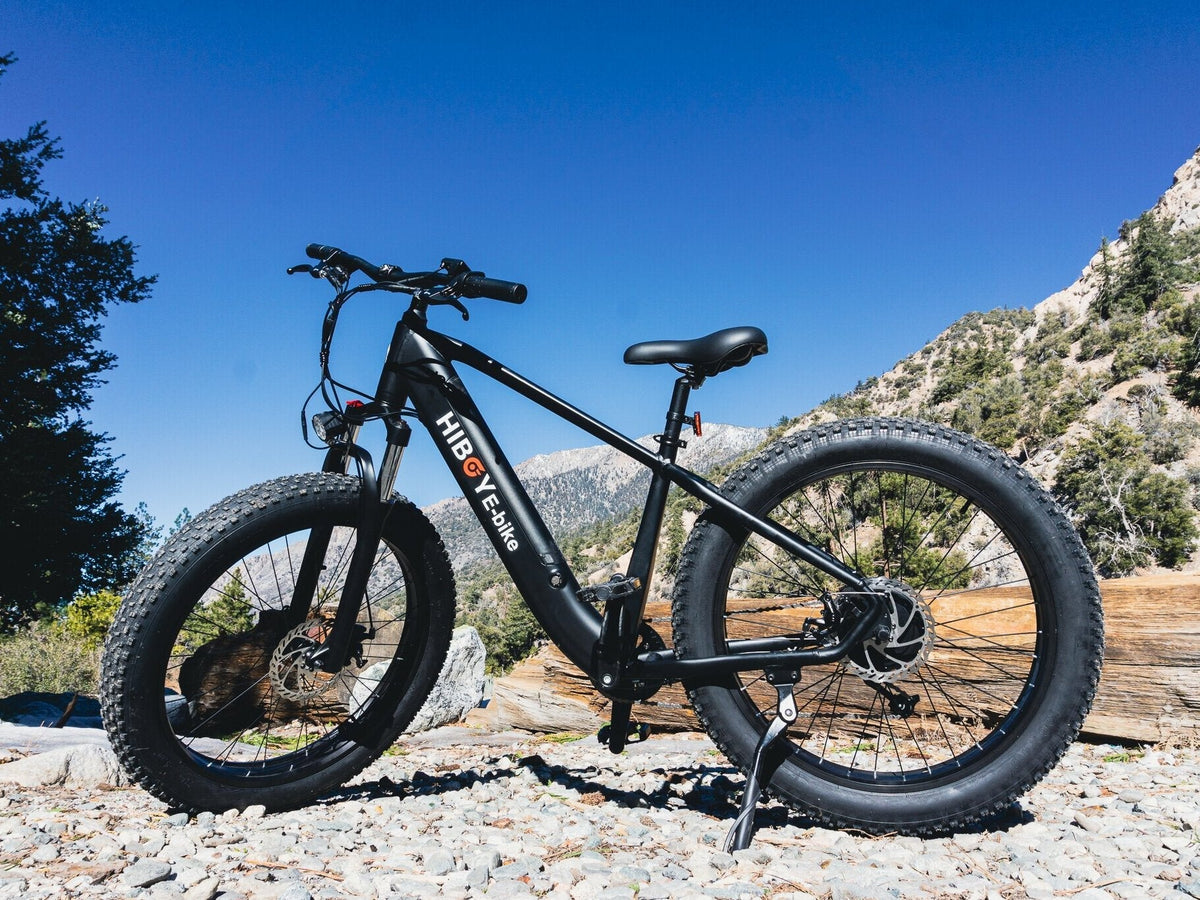
Buying your first electric bike is exciting. You get pedal assistance, more range than you might expect from a conventional bicycle, and an easier way to tackle hills, longer commutes, and everyday errands.
But an eBike is still a vehicle that requires some learning.
Many beginner problems don't come from major mechanical failures. They come from small mistakes: starting with too much motor assistance, ignoring tire pressure, charging the battery incorrectly, riding without understanding the controls, or assuming that the rules for eBikes are the same everywhere in Canada.
The good news is that most of these mistakes are easy to prevent.
Here are 10 common beginner eBike mistakes, and what you can do instead.
1. Starting With the Highest Pedal-Assist Level
One of the first things many new riders do is turn the pedal assistance all the way up.
It makes the bike feel powerful, but it isn't necessarily the easiest way to learn.
Higher assistance can make acceleration feel more sudden and can cause the bike to reach a higher speed before you're comfortable with its handling. It can also use more battery power.
How to avoid it
Start with a lower or moderate assistance setting in a quiet, open area.
Spend some time getting familiar with:
- Starting and stopping
- Steering
- Braking
- Gear shifting
- Pedal assistance
- Display controls
- Turning at different speeds
Once you are comfortable with the bike's response, gradually increase the assistance when you need it.
Beginner tip: Your first few rides should be about learning how the bike behaves, not testing its maximum speed.
2. Treating an eBike Like a Regular Bicycle
An eBike may look and ride like a conventional bicycle, but the added weight, motor assistance, battery, and higher potential speeds can change how it handles.
Acceleration can be quicker, and the extra weight means you may need more time and distance to slow down.
How to avoid it
Give yourself more stopping distance, particularly when riding downhill or on wet roads.
Practice controlled braking before riding in busy traffic. Learn how your front and rear brakes feel independently and together.
Avoid grabbing the brakes abruptly while turning, especially on loose or slippery surfaces.
And remember that the faster you're travelling, the more distance you need to react to something unexpected.

3. Ignoring Tire Pressure
Tire pressure is one of the easiest things to overlook, and one of the most important.
Underinflated tires can increase rolling resistance, reduce efficiency, affect handling, and make the bike feel sluggish. Overinflation can reduce comfort and may decrease traction depending on the tire and riding conditions.
Cold Canadian weather can also affect tire pressure.
How to avoid it
Check your tire pressure regularly and follow the pressure range recommended by the tire or eBike manufacturer.
Don't simply inflate the tires until they “look full.”
Make checking tire pressure part of your routine, especially before longer rides.
Also inspect the tires for:
- Cuts or cracks
- Embedded objects
- Excessive wear
- Bulges
- Unusual loss of pressure
A quick tire check can prevent a much bigger problem later.
4. Assuming the Advertised Range Is What You'll Always Get
“Up to 100 km” or another advertised range can be useful when comparing eBikes, but it shouldn't be interpreted as a guaranteed distance for every ride.
Real-world range depends on many factors, including:
- Rider weight
- Assistance level
- Speed
- Terrain
- Wind
- Temperature
- Tire pressure
- Stop-and-go riding
- Battery condition
- Cargo
For example, frequent hill climbing and high assistance can consume considerably more energy than riding on flat roads with moderate assistance.
How to avoid it
Think of the advertised range as a reference point rather than a promise.
If you're planning a long ride, leave a reasonable battery reserve rather than assuming you can use every last kilometre of the advertised range.
For commuting, it's also useful to understand your own typical energy consumption after several rides.
Your personal range data will eventually be more useful than a number on a product page.

5. Charging the Battery With the Wrong Charger
The battery is one of the most important, and most safety-sensitive, components of an eBike.
Using an incompatible charger, modifying the battery, or purchasing an unknown replacement battery can create serious safety risks.
Health Canada advises e-bike owners to use the original battery and an appropriate charger, and warns against modifying lithium-ion batteries or using incompatible replacements. Health Canada and Transport Canada also recommend e-bike electrical systems that comply with applicable safety standards such as CAN/UL 2849.
How to avoid it
Always:
- Use the charger specified by the manufacturer
- Check that the charger is compatible before using a replacement
- Follow the manufacturer's charging instructions
- Inspect the battery and charger for damage
- Stop using a battery that is visibly damaged or behaving abnormally
- Keep the battery away from easily combustible materials while charging
- Avoid modifying or opening the battery yourself
Don't choose a third-party charger simply because it is cheaper.
For lithium-ion batteries, compatibility matters more than convenience.
6. Charging and Storing the Battery in the Wrong Conditions
A common beginner mistake is treating the eBike battery like a phone battery: plug it in anywhere and leave it there.
Lithium-ion batteries require more care.
Health Canada recommends charging and storing e-bike batteries away from combustible materials, while Transport Canada advises keeping lithium batteries at room temperature and away from things that can catch fire.
Temperature is particularly relevant for Canadian riders.
Extremely cold conditions can temporarily reduce battery performance and available range. Bringing a very cold battery directly into a charging cycle isn't a good practice.
How to avoid it
When possible:
- Charge the battery in a suitable, dry location
- Follow the manufacturer's recommended temperature range
- Allow a very cold battery to return to an appropriate temperature before charging
- Don't charge a visibly damaged or swollen battery
- Don't cover the battery or charger with blankets or other materials while charging
- Follow the manufacturer's storage instructions if the bike won't be used for an extended period
If you're storing an eBike for winter, check the owner's manual for the recommended battery storage charge level and storage conditions.

7. Forgetting to Check the Brakes
New riders often focus on the motor and battery while overlooking one of the most important components on the bike: the brakes.
An eBike can be heavier and faster than a conventional bicycle, which makes reliable braking particularly important.
How to avoid it
Before every ride, perform a quick brake check.
Squeeze the brake levers and make sure they feel firm and responsive.
Pay attention to:
- Unusual noises
- Excessive lever travel
- Weak braking
- Vibrations
- Uneven braking
- Worn brake pads
If something feels different from normal, don't simply ride through it.
Have the brakes inspected or serviced before continuing to ride.
8. Skipping the Pre-Ride Safety Check
You don't need a 20-minute inspection before every trip.
A quick check can take less than a minute.
Before riding, look over the major components that could affect your safety.
A simple eBike pre-ride check
- Tires: Are they properly inflated and free of obvious damage?
- Brakes: Do both brakes respond normally?
- Battery: Is it securely installed and sufficiently charged?
- Wheels: Are they properly secured?
- Handlebars: Are they tight and correctly aligned?
- Lights: Are the front and rear lights working if you're riding in low-light conditions?
- Controls: Are the display, throttle if equipped, and pedal-assist controls functioning normally?
Also make sure any cargo is securely attached and cannot interfere with the wheels, brakes, or steering.
This small habit can catch problems before they become roadside failures.
9. Riding Without Understanding Canadian eBike Rules
One mistake that is particularly important for Canadian beginners is assuming that eBike regulations are identical everywhere in the country.
They aren't.
Rules governing eBikes, including requirements related to speed, motor output, rider age, helmets, where they can be ridden, and equipment, can vary by province or territory.
Transport Canada notes that power-assisted bicycles fall under provincial and territorial jurisdictions for their use and operating conditions.

For example, British Columbia currently has specific categories for light and standard e-bikes, with different motor-power, speed, age, and throttle requirements.
Ontario also has its own requirements, including a minimum rider age of 16 and helmet requirements for eBike riders.
How to avoid it
Before your first ride, check the current rules for your province or territory.
Pay particular attention to:
- Minimum rider age
- Helmet requirements
- Maximum permitted speed
- Motor power requirements
- Throttle rules
- Where eBikes can be ridden
- Bike-lane and road requirements
- Local municipal restrictions
Don't assume that an eBike that's legal in one province automatically has the same operating requirements everywhere else in Canada.
10. Riding Without a Properly Fitted Helmet
A helmet should be part of your basic eBike equipment, not an optional accessory.
Health Canada recommends helmets for activities where falls or impacts can occur and specifically identifies a bicycle helmet as appropriate for e-bicycling. A helmet should fit snugly, sit low on the forehead, and have a properly adjusted chin strap.
But simply wearing a helmet isn't enough if it doesn't fit correctly.
How to avoid it
Your helmet should:
- Fit snugly without excessive movement
- Sit low on your forehead
- Have properly adjusted straps
- Have a securely fastened buckle
- Be free of cracks or significant damage
- Be appropriate for cycling
Health Canada recommends replacing a single-impact helmet after an impact, even when visible damage isn't obvious.
And don't buy a used helmet if you don't know its history.
5 More Beginner Habits That Make eBiking Easier
The mistakes above are mostly about safety and equipment. But a few everyday habits can also make the transition to eBiking much smoother.
Learn the Bike Before Taking It Into Traffic
Your first ride shouldn't necessarily be your commute.
Find a quiet parking area, bike path, or other appropriate low-traffic location where you can practice starting, stopping, turning, shifting, and changing assistance levels.
You want the controls to become familiar before you have to react to traffic.
Don't Ride at Maximum Speed Just Because You Can
A bike's maximum assisted speed isn't necessarily the speed you should use all the time.
Ride at a speed that matches the road, traffic, visibility, weather, and your experience level.
Higher speed also means less reaction time and a longer stopping distance.

Be Extra Careful on Wet or Slippery Roads
Rain changes the riding environment.
Wet pavement can reduce traction, increase stopping distances, and make road markings, leaves, metal surfaces, and other areas more slippery.
Slow down and brake smoothly.
Give yourself additional space around vehicles and other riders.
Secure Your eBike When You Park
An eBike can be a significant investment, so don't overlook theft prevention.
When leaving the bike unattended:
- Use a quality lock
- Secure the frame to a fixed object where permitted
- Choose a visible location
- Avoid leaving it unattended for long periods
- Consider additional security such as a secondary lock or tracking device
If your eBike has a removable display or battery and the manufacturer recommends removing it when parked, follow those instructions.
Read the Owner's Manual
It sounds obvious, but many beginners skip this step.
The owner's manual tells you details that generic eBike advice cannot, including:
- Recommended tire pressure
- Charging instructions
- Battery storage
- Maximum load
- Maintenance intervals
- Error codes
- Brake information
- Approved accessories
- Operating limitations
Five minutes with the manual can save you from making an expensive mistake later.
A Simple First-Ride Checklist for New eBike Owners
Before heading out, run through this quick checklist:
- ☐ Battery securely installed and adequately charged
- ☐ Tires properly inflated
- ☐ Brakes working normally
- ☐ Wheels and handlebars secure
- ☐ Lights and display working
- ☐ Helmet fitted correctly
- ☐ Assistance level set appropriately
- ☐ Phone and other cargo secured
- ☐ Route and local eBike rules understood
- ☐ Weather and road conditions checked
If all ten boxes are checked, you're ready to ride.
Beginner eBike Mistakes FAQs
What is the most common mistake new eBike riders make?
One common mistake is starting with too much pedal assistance or speed before becoming familiar with the bike's acceleration and braking. Starting at a lower assistance level and practicing in a low-traffic area can make the learning process easier.
How often should I check my eBike tires?
Check tire pressure regularly and before longer rides. Use the pressure range recommended by the tire or eBike manufacturer rather than relying on how the tire looks.
Can I use any charger with my eBike?
No. Use the charger specified or approved by the eBike manufacturer. An incompatible charger can create electrical and fire hazards.
Should I charge my eBike battery immediately after riding in cold weather?
Follow the manufacturer's charging instructions. If the battery has been exposed to very cold conditions, allow it to return to an appropriate temperature before charging rather than immediately charging a very cold battery.
Do I need a helmet on an eBike in Canada?
Helmet requirements vary by province and territory. Regardless of local requirements, Health Canada recommends an appropriate bicycle helmet for e-bicycling. Check your provincial and municipal rules before riding.
Are eBike laws the same across Canada?
No. Provinces and territories can have different requirements for eBike speed, motor output, rider age, helmets, equipment, and where eBikes can be operated. Always check the rules that apply where you live.






Partager:
Is E-Biking Good for Your Heart? Cardiovascular Benefits of Riding an Electric Bike
10 Useful Gifts for E-Bike Riders in Canada: Practical Ideas for Every Cyclist