



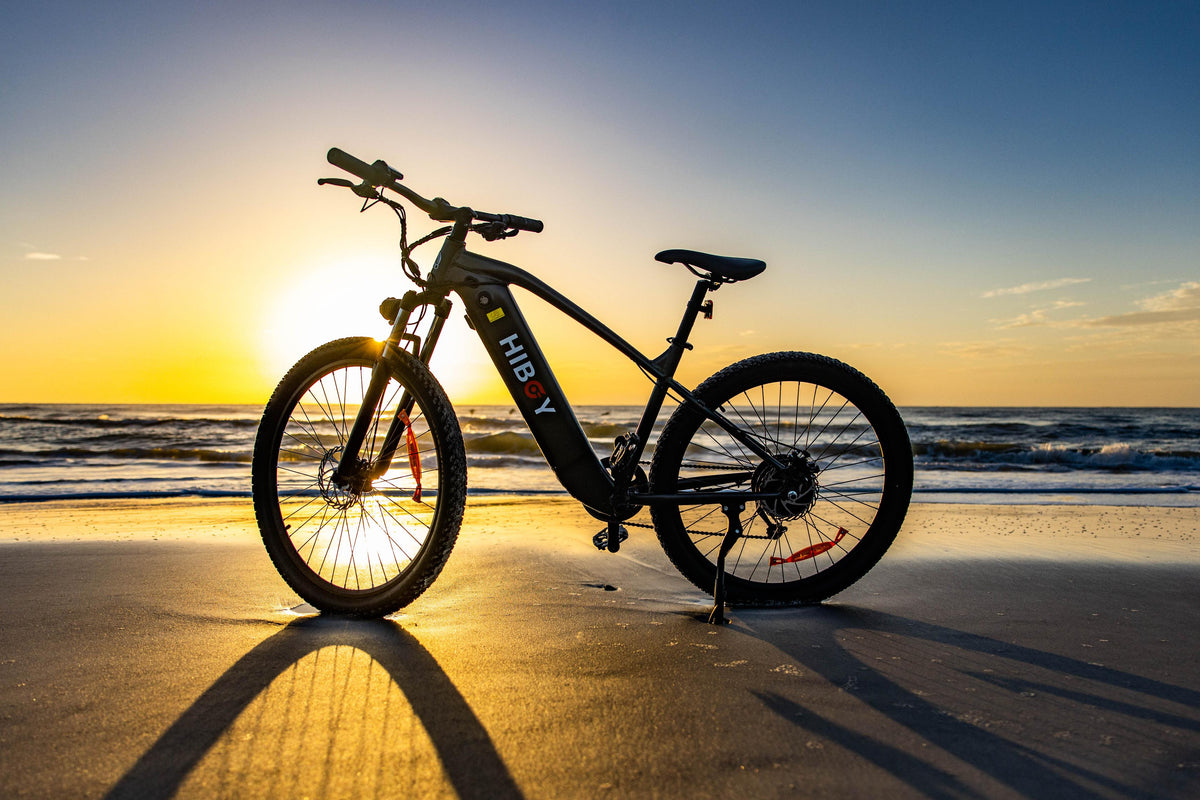
Electric bikes offer a convenient way to get around without relying on a car. They're easy to use, relatively affordable, and make everyday trips more enjoyable. But what happens if you have a few drinks and decide to ride your e-bike home?
Can you get a DUI on an e-bike in Canada?
Yes, you can potentially face an impaired-operation charge for riding an e-bike under the influence of alcohol or drugs. Although an e-bike may look and feel like a regular bicycle, its electric motor can make it legally different from a conventional pedal bike under Canada's Criminal Code.
The rules can also vary depending on your province, the type of e-bike you're riding, and how it is being operated. Understanding these distinctions is important before assuming that cycling home after drinking is a safe or legal alternative to driving.
In this guide, we'll explain how Canadian impaired-driving laws apply to e-bikes, what penalties you could face, how the rules differ from those for regular bicycles, and how to plan a safe ride home.
Can You Get a DUI on an E-Bike in Canada?
Yes. Riding an e-bike while impaired by alcohol or drugs can potentially result in a criminal charge under Canada's impaired-operation laws.
The relevant legislation is the Criminal Code of Canada, which prohibits operating a conveyance while your ability to operate it is impaired by alcohol, drugs, or a combination of both.
Under Section 320.14(1), a person commits an offence if they:
- Operate a conveyance while their ability to operate it is impaired to any degree by alcohol or drugs.
- Have a blood alcohol concentration (BAC) of 80 mg of alcohol per 100 mL of blood or higher within two hours after ceasing to operate a conveyance, subject to the exceptions set out in the Code.
The key legal distinction is how the Criminal Code defines a motor vehicle. Section 2 defines it as a vehicle drawn, propelled, or driven by any means other than muscular power. A motor vehicle is included in the Criminal Code's definition of a conveyance.
Because an e-bike uses an electric motor to provide propulsion, its operation can fall within the scope of these provisions.
However, the legal classification of a particular e-bike and the circumstances of its operation can matter. Provincial definitions of an e-bike do not necessarily determine how the federal Criminal Code applies.
For more information, you can consult Section 2 of the Criminal Code and Section 320.14.

Does the DUI Law Apply to Regular Bicycles and E-Bikes Equally?
No. A conventional pedal bicycle and an electric bicycle are not necessarily treated the same under Canadian impaired-operation laws.
A regular bicycle is propelled by the rider's muscular power. It generally does not fall within the Criminal Code's definition of a motor vehicle, so riding a conventional bicycle while intoxicated does not ordinarily result in a Criminal Code impaired-driving charge.
An e-bike is different because it has an electric motor that can propel or assist the bicycle.
Here's a general comparison:
| Vehicle Type | Potential Criminal Code DUI Charge? |
| Conventional pedal bicycle | Generally no |
| Electric bicycle | Yes, potentially |
| Electric scooter | Yes, potentially, depending on its legal classification |
| Motorcycle | Yes |
| Car or truck | Yes |
This distinction doesn't mean that drinking and riding a regular bicycle is risk-free or automatically permitted. Cyclists must still follow applicable traffic rules and local laws. Police may also intervene when someone is riding dangerously or creating a public safety risk.
The safest approach is to avoid riding any type of bicycle or motorized vehicle when impaired.
What Do Canadian Provinces Say About DUI on E-Bikes?
Canada has federal impaired-operation laws, but provinces and territories also establish their own rules for e-bike classification, equipment, road use, and cycling behaviour.
Some provincial governments explicitly warn that impaired-operation laws can apply to electric bicycles.
Here are a few examples.
1. Ontario
Ontario has specific requirements for electric bicycles, including:
- A maximum motor output of 500W.
- A maximum assisted speed of 32 km/h.
- Working pedals.
- A maximum weight of 120 kg, including the battery.
Ontario also requires e-bike riders to follow the same general rules of the road as other cyclists.

However, the distinction between a provincially regulated power-assisted bicycle and a motor vehicle under the federal Criminal Code is important. Meeting Ontario's e-bike requirements does not automatically mean that an impaired rider is exempt from federal criminal law.
In April 2026, Ontario Provincial Police charged a 52-year-old man with impaired operation after an incident involving an electric bicycle in Plympton-Wyoming. The case illustrates that police may pursue Criminal Code impaired-operation charges involving e-bikes. A charge, however, is not the same as a conviction.
For current requirements, visit the Ontario government's e-bike regulations.
2. Quebec
Quebec explicitly addresses impaired e-bike riding in its official guidance.
According to the Government of Quebec, consuming alcohol or drugs while riding a bicycle is prohibited. Operating an electric bicycle while impaired by alcohol or drugs may constitute an offence under the Criminal Code of Canada.
Quebec also requires standard e-bikes used on public roads to meet specific technical requirements, including:
- A motor rated at no more than 500W.
- Electric assistance that stops at 32 km/h or less.
- Functional pedals.
E-bike riders must also wear helmets and generally be at least 18 years old, with an exception for certain 14-to-17-year-olds who hold a moped licence.
For more information, visit the Quebec government's electric bike regulations.
3. British Columbia
British Columbia has its own Motor Assisted Cycle Regulation, which establishes the requirements for legal e-bikes.
The province recognizes different e-bike classes, including light and standard e-bikes. These classifications have specific requirements relating to motor power, assisted speed, equipment, and rider age.
Although the provincial regulation focuses primarily on vehicle classification and road use, riders should not assume that an e-bike's bicycle classification provides an exemption from federal impaired-operation laws.
The Criminal Code's definition of a motor vehicle is separate from the definitions used in provincial cycling regulations.
For details, consult the B.C. Motor Assisted Cycle Regulation.

4. Prince Edward Island
Prince Edward Island provides particularly clear guidance on impaired riding.
The provincial government explains that although a power-assisted bicycle is not considered a motor vehicle under the Highway Traffic Act, impaired-operation provisions under the federal Criminal Code can still apply.
In July 2026, the RCMP in Prince Edward Island arrested an individual suspected of operating an e-bike while impaired. According to the police report, the rider's breath samples were more than twice the criminal legal alcohol limit.
The RCMP emphasized that impaired-driving laws can apply to motorized conveyances beyond cars and trucks, including e-bikes and electric scooters.
You can read the Prince Edward Island government's power-assisted bicycle guidance and the RCMP news release.
Important: These examples are not a complete summary of every provincial or territorial law. Rules and enforcement practices can differ, and legal interpretations may depend on the specific vehicle and circumstances. Always check the current regulations where you plan to ride.
What Is the Legal Alcohol Limit for Riding an E-Bike?
There is no separate, universally applicable alcohol limit that makes riding an e-bike safe or legally acceptable.
Under Section 320.14(1)(a) of the Criminal Code, operating a covered conveyance while your ability to operate it is impaired to any degree by alcohol or drugs can constitute an offence.
The familiar 0.08% BAC threshold is another basis for an impaired-operation offence under Section 320.14(1)(b). It is not a general permission to operate an e-bike after drinking below that level.
In other words, you don't necessarily have to reach a BAC of 0.08% to face an impaired-operation charge.
Alcohol affects several abilities that are essential for riding an e-bike safely:
- Balance and coordination: Alcohol can make it harder to maintain stability, particularly when turning or navigating uneven surfaces.
- Reaction time: You may respond more slowly to pedestrians, vehicles, and unexpected obstacles.
- Judgment: Alcohol can affect your ability to assess road conditions, speed, and potential hazards.
- Concentration: Staying aware of traffic, road signs, and other cyclists becomes more difficult.
Even a relatively small amount of alcohol can affect your riding ability. The safest option is to avoid alcohol before riding.

What Are the Penalties for Getting a DUI on an E-Bike?
The consequences of an impaired-operation conviction can be serious.
If an e-bike is treated as a conveyance under the Criminal Code and the required elements of an offence are established, the rider may face criminal penalties.
Depending on the offence, prior convictions, and circumstances, consequences can include:
1. Fines
A conviction for impaired operation can result in substantial fines. The Criminal Code establishes minimum fines for certain impaired-operation offences, with higher penalties possible depending on the circumstances.
2. Criminal Record
A criminal conviction can result in a criminal record. This may affect future employment opportunities, professional licensing, international travel, and other aspects of everyday life.
3. Driving Prohibition
A court may impose a driving prohibition following an impaired-operation conviction.
This is particularly important for people who assume that riding an e-bike means their regular driver's licence cannot be affected. A conviction under the Criminal Code can have consequences beyond the specific vehicle involved.
4. Possible Imprisonment
Impaired-operation offences can carry jail sentences. The potential penalty depends on the nature of the offence, whether anyone was injured, and whether the person has previous convictions.
If an impaired rider causes bodily harm or death, the legal consequences can be significantly more serious.
5. Additional Provincial Consequences
Depending on the province and circumstances, riders may also face administrative licence consequences, vehicle impoundment, or other penalties.
The exact outcome depends on the applicable legislation and the facts of the case. For detailed legal advice about a specific charge, consult a qualified criminal defence lawyer.
Can Police Stop You for Riding an E-Bike While Intoxicated?
Yes. Police can intervene if they have grounds to suspect impaired operation or observe unsafe riding behaviour.
Depending on the circumstances and applicable legal authority, an officer may:
- Stop the rider and investigate the situation.
- Observe signs of alcohol or drug impairment.
- Make a lawful demand for a breath sample or other testing.
- Arrest the rider if the legal requirements for arrest are met.
- Lay an impaired-operation charge if the evidence supports it.
The Criminal Code also makes it an offence to refuse or fail to comply with a lawful demand for a breath or bodily-substance sample without a reasonable excuse.

Importantly, a police stop or charge does not automatically mean the rider will be convicted. The prosecution must establish the required elements of the offence.
Is Riding an E-Bike After Drinking Safer Than Driving a Car?
Some people assume that riding an e-bike after drinking is a safer alternative to driving because an e-bike is smaller, slower, and easier to manoeuvre.
However, this assumption overlooks several important risks.
First, e-bike riders have limited physical protection. Unlike car occupants, cyclists are exposed to the road and surrounding traffic. Even a relatively low-speed fall can cause serious injuries.
Second, impaired balance can make an e-bike difficult to control. Electric assistance can make acceleration easier, but it doesn't improve a rider's coordination or judgment.
Third, e-bikes can travel at relatively high speeds. Many models can reach 25–32 km/h under normal assisted riding conditions, and some configurations may travel faster. Reduced reaction time at these speeds increases the risk of collisions.
Finally, impaired riding can put other people at risk. Pedestrians, cyclists, and drivers may all be affected by a rider who cannot respond appropriately to changing road conditions.
Choosing an e-bike instead of a car does not make riding after drinking a safe decision.
How to Get Home Safely After Drinking
If you plan to drink, the easiest way to avoid an impaired-riding situation is to arrange your transportation before going out.
Here are a few practical alternatives:
Take a Taxi or Rideshare
A taxi or rideshare service is one of the simplest ways to get home without operating a vehicle yourself.
Use Public Transportation
If buses, trains, or other public transportation options are available, consider using them instead of riding your e-bike.
Ask Someone for a Ride
A sober friend or family member can help you get home safely.
Leave Your E-Bike Behind
If you arrive on an e-bike but decide to drink, leave it securely parked and collect it later. The inconvenience of returning your bike is much smaller than the potential consequences of impaired riding.
Plan Ahead
Before heading out, decide how you will get home. If you know you'll be drinking, avoid relying on your e-bike as your return transportation.

FAQs About DUI and E-Bikes in Canada
1. Can you get a DUI on an e-bike in Canada?
Yes, potentially. Canada's Criminal Code prohibits operating a motor vehicle or other covered conveyance while impaired by alcohol or drugs. Because an e-bike uses an electric motor, its operation can fall within the scope of these laws. The specific legal classification and circumstances matter.
2. Can you get a DUI on a regular bicycle in Canada?
A conventional pedal bicycle generally does not meet the Criminal Code's definition of a motor vehicle because it is powered by muscular force. Therefore, riding a regular bicycle while intoxicated does not ordinarily result in a Criminal Code DUI charge. However, other provincial or municipal rules may apply to unsafe or impaired cycling.
3. Can you ride an e-bike after drinking one beer?
There is no universal number of drinks that guarantees you are safe or legally permitted to ride. Alcohol affects people differently, and even one drink can affect balance, coordination, and judgment. The safest choice is not to ride after drinking.
4. Can you lose your driver's licence for an e-bike DUI?
Yes, a Criminal Code impaired-operation conviction can result in a driving prohibition, even if the vehicle involved was an e-bike. Additional provincial licence consequences may also apply.
5. Does the 0.08 BAC limit apply to e-bikes?
The Criminal Code's 0.08% BAC provision applies to covered conveyances, which may include e-bikes. However, an impaired-operation offence can also occur when a person's ability to operate a covered conveyance is impaired to any degree. A BAC below 0.08% does not automatically mean riding is legal.
6. Can you get a DUI on an electric scooter in Canada?
Potentially, yes. Electric scooters are motorized devices, but their legal classification and permitted use vary by province and municipality. Depending on the circumstances, impaired-operation laws may apply. Check the rules governing your specific device and location.
7. Do DUI laws apply to e-bikes on private property?
The answer can depend on the applicable legal provisions and circumstances. Some Criminal Code offences do not require operation on a public road. Do not assume that riding on private property automatically exempts you from impaired-operation laws.






Share:
Black Friday Deals 2026: How to Find the Best Electric Bike and Scooter Deals