



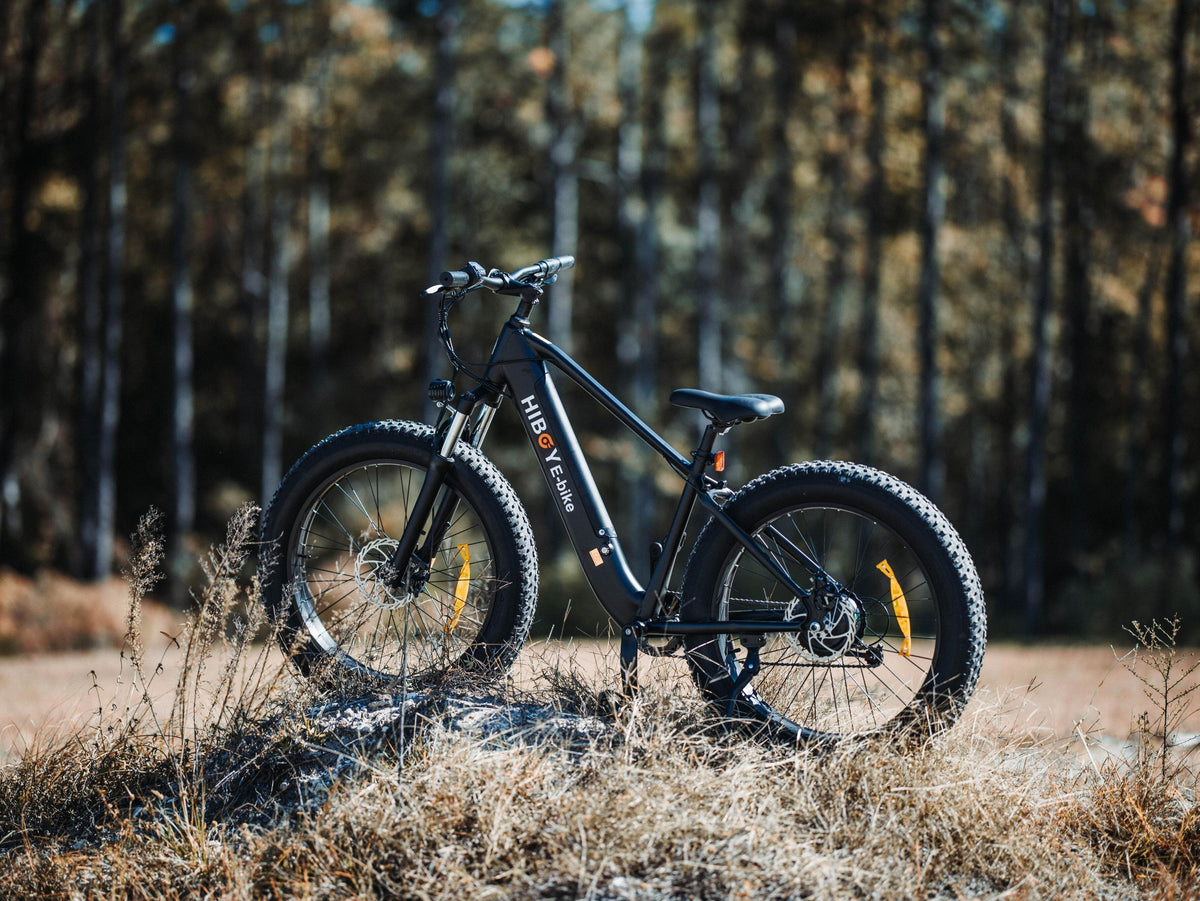
How far can an eBike go on a single charge?
The answer isn't as simple as the range number printed on the product page.
An eBike's real-world range depends on much more than battery capacity. Rider weight, terrain, speed, pedal-assist level, tire pressure, temperature, wind, stop-and-go riding, and even how you maintain the battery can all affect how much distance you get from a charge.
This is why two riders using the same eBike can sometimes get noticeably different ranges.
The good news is that you don't need a larger battery to get more miles from the battery you already have.
By changing how you ride, maintaining the bike properly, and adapting your riding to conditions, you can make better use of your available battery capacity and potentially extend your riding range.
Here are 12 practical ways to maximize your eBike's range.
What Determines an eBike's Range?
Before looking at ways to increase range, it helps to understand what actually determines it.
An eBike's range is influenced by several factors:
- Battery capacity: Usually measured in watt-hours (Wh)
- Motor power and efficiency
- Pedal-assist level
- Riding speed
- Rider and cargo weight
- Terrain and elevation
- Tire pressure and type
- Wind conditions
- Temperature
- Stop-and-go riding
- Throttle use
- Battery condition
- Riding technique
The battery is essentially the energy reservoir, while the motor and riding conditions determine how quickly that energy is consumed.

Understanding watt-hours
Battery capacity is commonly expressed in watt-hours.
A simple calculation is:
Battery voltage × battery amp-hours = watt-hours
For example, a 48V battery rated at 15Ah has approximately:
48 × 15 = 720Wh
A higher Wh rating generally means more stored energy, but it doesn't guarantee a specific distance.
A 720Wh battery could deliver very different real-world ranges depending on how and where you ride.
1. Use the Lowest Assist Level That Feels Comfortable
One of the easiest ways to extend eBike range is to adjust your pedal-assist level.
Higher assistance generally means the motor contributes more power, which can increase energy consumption.
If you're riding on flat pavement and don't need much assistance, using a lower PAS level can help conserve battery energy.
For example:
- Low PAS: Flat roads, bike paths, easy cruising
- Medium PAS: Moderate hills, longer commutes, mixed terrain
- High PAS: Steep climbs, strong headwinds, situations where you need more assistance
You don't have to stay in the lowest mode throughout the entire ride.
Instead, match assistance to the terrain.
If you reach a hill, increase assistance temporarily. Once you're back on flat ground, reduce it again.
This approach gives you motor assistance when it is most useful without using maximum power when you don't need it.
2. Pedal More to Go Farther
An eBike is still a bicycle.
The more work you contribute through the pedals, the less work the motor needs to provide.

This doesn't mean you need to turn every ride into a workout.
Even moderate pedaling can help reduce the amount of energy drawn from the battery.
Try maintaining a steady pedaling rhythm rather than relying heavily on the throttle or maximum pedal assistance.
This is particularly effective when:
- Riding on flat roads
- Starting from a stop
- Approaching a hill
- Riding with a strong battery-saving goal
Think of the motor as an assistant rather than the only source of propulsion.
3. Keep Your Speed Under Control
Speed has a significant effect on energy consumption.
The faster you ride, the more energy is generally required to overcome aerodynamic drag and maintain your speed.
This becomes increasingly noticeable at higher speeds.
If maximum range is your priority, consider riding at a moderate, consistent speed rather than continuously riding at the eBike's maximum assisted speed.
For commuting, this can also make your ride more predictable.
Instead of:
Maximum speed → hard braking → acceleration → maximum speed
try:
Steady speed → anticipate traffic → smooth acceleration → steady speed
This reduces unnecessary energy consumption and can make the ride more comfortable at the same time.
4. Maintain the Correct Tire Pressure
Tire pressure is one of the easiest things to overlook—and one of the easiest things to check.
Underinflated tires increase rolling resistance.
That means the motor has to work harder to move the bike forward.
Check your tire pressure regularly and keep it within the range recommended by the tire or eBike manufacturer.
Don't simply inflate the tires to the maximum pressure printed on the sidewall without considering the bike manufacturer's recommendations.
Your ideal pressure may vary depending on:
- Rider weight
- Tire size
- Tire construction
- Terrain
- Cargo
- Riding style
For everyday road riding, properly inflated tires can help reduce rolling resistance and make pedaling easier.
For off-road riding, pressure may be adjusted differently, but it should still remain within the manufacturer's recommended range.

5. Keep Your eBike Properly Maintained
A well-maintained eBike can operate more efficiently than one with unnecessary mechanical resistance.
Regularly check:
Tires
Look for low pressure, excessive wear, cuts, or damage.
Brakes
Make sure the brake pads aren't rubbing against the rotor or rim when you're not braking.
Chain
Keep the chain clean and appropriately lubricated according to the manufacturer's recommendations.
Drivetrain
Check that the chain, cassette, derailleur, and other components are operating properly.
Wheels
Make sure they rotate freely and aren't rubbing against the frame or brake components.
Small amounts of resistance may not seem significant individually, but unnecessary friction can increase the effort required from both rider and motor.
6. Reduce Unnecessary Weight
Your eBike has to move not only itself but also the rider and anything being carried.
Additional weight increases the amount of energy required, particularly when:
- Accelerating
- Climbing hills
- Starting and stopping frequently
Before a long ride, consider whether you really need everything in your pannier, backpack, or basket.
That doesn't mean stripping your eBike down to the minimum.
Essential equipment such as lights, locks, repair supplies, water, and safety gear should stay with you.
The goal is simply to avoid carrying unnecessary weight.
7. Plan Your Route Around Hills and Terrain
Elevation changes can have a major effect on range.
Climbing requires significantly more energy than riding on level ground because the motor and rider are working against gravity.
If you're planning a long ride, consider using a route that avoids unnecessary steep climbs when practical.
A slightly longer route with gentler grades may sometimes use less energy than a shorter route with several steep hills.
For commuting, route planning can therefore be a useful range-management strategy.

You can also conserve battery on climbs by:
- Starting the climb with enough momentum.
- Shifting to an appropriate gear.
- Pedaling consistently.
- Avoiding unnecessary acceleration.
- Using higher assistance only when needed.
8. Use Your Gears Effectively
If your eBike has multiple gears, learn to use them.
Your gears allow you to adjust how much effort is required to turn the pedals.
A lower gear can make climbing easier, while a higher gear can be useful for maintaining speed on flatter terrain.
On a climb, shifting into an appropriate lower gear can allow you to maintain a comfortable cadence rather than pushing an unnecessarily difficult gear.
This can help you contribute more of the required power yourself and reduce the workload on the motor.
A useful rule is:
Shift before the hill gets too steep.
Waiting until you're already struggling can make the transition more difficult.
9. Avoid Unnecessary Stop-and-Go Riding
Starting from a complete stop requires more energy than maintaining a steady speed.
If your route involves frequent traffic lights, intersections, and congestion, you may naturally consume more battery than someone riding at a consistent pace.
You can't always avoid stopping, of course.
But you can make your acceleration smoother.
Instead of immediately demanding maximum motor output after every stop:
- Start pedaling first.
- Accelerate progressively.
- Shift into an appropriate gear.
- Settle into a consistent cruising speed.
Smooth acceleration can reduce unnecessary battery consumption while also making your ride more comfortable.
10. Watch the Weather, Especially in Canada
Canadian riders have another important range variable to consider: temperature.
Cold weather can temporarily reduce lithium-ion battery performance and available capacity. This means an eBike that delivers a certain range in mild weather may travel a shorter distance in colder conditions.
The effect depends on factors such as temperature, battery condition, riding conditions, and battery chemistry.
If you're riding during colder months, consider:
Keep the battery from getting unnecessarily cold
When possible, store the battery in a temperature-controlled environment rather than leaving it exposed to extreme cold for extended periods.
Don't charge a cold battery immediately
If the battery has been exposed to very low temperatures, follow the eBike manufacturer's charging and temperature recommendations before charging.

Plan for reduced range
If you're commuting in winter, don't plan your route based on the maximum range you achieve during summer.
Leave additional battery margin for colder conditions.
Avoid unnecessary exposure
If you're stopping somewhere for an extended period, consider how long the battery will be exposed to the cold.
For Canadian eBike riders, seasonal range planning is especially important.
11. Pay Attention to Wind
Wind can have a surprisingly large effect on range.
A strong headwind means your eBike has to overcome additional aerodynamic resistance.
You may notice that the same route takes considerably more battery energy on a windy day than on a calm day.
When planning a long ride:
- Check the weather forecast.
- Consider wind direction.
- Leave additional battery capacity for strong headwinds.
- Avoid riding at unnecessarily high speeds when facing the wind.
If you're riding into a strong headwind, reducing speed slightly can help limit the additional energy required.
A tailwind on the return journey may make the ride easier, but don't assume the benefit will completely cancel out the extra energy used on the outbound trip.
12. Don't Wait Until the Battery Is Nearly Empty
If you regularly ride until the battery is almost completely depleted, you have less flexibility when conditions change.
A longer ride can suddenly become much longer if you encounter:
- Unexpected hills
- Strong headwinds
- Cold weather
- Extra cargo
- Detours
- Higher traffic
- More frequent stops
Instead of treating the battery's advertised maximum range as your target, think of it as a reference point.
For longer rides, build in a reserve.
For example, if your route is close to the upper end of your expected real-world range, consider:
- Choosing a shorter route
- Carrying a compatible charger when practical
- Identifying charging opportunities
- Reducing your assist level
- Keeping your speed moderate
Range anxiety is often less about the battery itself and more about leaving no margin for changing conditions.
How Much Range Can You Actually Get From an eBike?
This is one of the most common questions eBike buyers ask.

The honest answer is:
It depends.
Manufacturers typically publish range figures under specified test or idealized conditions. Real-world range can be lower because riders encounter hills, wind, cold temperatures, stop-and-go traffic, heavier loads, and different assist levels.
For example, a rider who:
- Uses low pedal assist
- Pedals consistently
- Rides on flat pavement
- Maintains moderate speed
- Uses properly inflated tires
- Carries little additional weight
- Rides in mild weather
may achieve considerably more range than a rider who:
- Uses high assistance
- Relies heavily on the throttle
- Rides at high speed
- Climbs steep hills
- Carries heavy cargo
- Rides into strong wind
- Rides in cold weather
So instead of asking only "How many miles does this eBike get?", ask:
"How many miles can I reasonably expect under the conditions in which I actually ride?"
That's a much more useful way to evaluate eBike range.
Advertised Range vs. Real-World Range
When comparing eBikes, don't assume the advertised range is a guarantee.
A published range figure is generally a reference point under particular conditions.
Your actual range can vary because of:
| Factor | Typical Effect on Range |
| Higher assist level | Uses more battery |
| Higher speed | Generally increases energy consumption |
| Heavy rider/cargo | Requires more energy |
| Steep hills | Increases motor workload |
| Strong headwind | Increases energy consumption |
| Low tire pressure | Increases rolling resistance |
| Cold temperatures | Can reduce available battery performance |
| Frequent stops | Requires repeated acceleration |
| Throttle-heavy riding | Can consume more energy |
| Smooth pedaling | Can reduce motor workload |
This is why range shouldn't be treated as a single fixed number.
It's better understood as a range of possible results under different conditions.

Should You Always Ride in Eco Mode to Maximize Range?
Not necessarily.
Using the lowest assist mode all the time may maximize battery conservation, but that isn't necessarily the best riding experience.
The goal is to find the right balance.
For example:
- Flat road: Low PAS
- Rolling terrain: Medium PAS
- Steep hill: Higher PAS
- Downhill: Lower or no motor assistance where appropriate
This allows you to use battery power strategically.
The same principle applies to speed.
You don't need to ride as slowly as possible. You simply want to avoid using significantly more energy than necessary for the riding conditions.
How to Maximize Range on a Long eBike Ride
If you're planning a long ride, use this simple checklist before leaving.
Before the ride
- Charge the battery according to the manufacturer's instructions.
- Check tire pressure.
- Inspect the brakes.
- Check the chain and drivetrain.
- Remove unnecessary cargo.
- Check the weather forecast.
- Look at the route and elevation.
- Estimate your expected range conservatively.
During the ride
- Use an appropriate PAS level.
- Pedal consistently.
- Maintain a moderate speed.
- Shift gears appropriately.
- Avoid unnecessary hard acceleration.
- Reduce assistance on easy sections.
- Monitor battery level.
- Keep some reserve for unexpected conditions.
These small decisions can add up over a long ride.
How to Protect Your eBike Battery for Long-Term Range
Maximizing range isn't only about what you do during a ride.
Battery condition matters too.
Follow the battery manufacturer's recommendations for:
- Charging
- Storage
- Temperature
- Inspection
- Transportation
- Long-term storage
Avoid exposing the battery to extreme environmental conditions unnecessarily, and use the charger and charging equipment recommended for your eBike.

If you won't be riding the bike for an extended period, follow the manufacturer's storage guidance rather than leaving the battery completely depleted for months.
A healthy battery is important not only for today's ride but also for maintaining useful capacity over time.
A Simple Formula for Planning Your eBike Range
If you know your battery's capacity and have an estimate of your bike's energy consumption, you can make a rough range calculation.
For example:
Estimated range = Battery capacity (Wh) ÷ Energy consumption (Wh/mile)
Suppose an eBike has a 720Wh battery and consumes approximately 20Wh per mile under a particular set of conditions:
720 ÷ 20 = 36 miles
But this is only an estimate.
If hills, wind, cold temperatures, higher speeds, or heavier loads increase energy consumption to 25Wh per mile:
720 ÷ 25 = 28.8 miles
The same battery can therefore produce very different ranges depending on conditions.
That's why there isn't a universal "miles per battery" number that applies to every rider.
The Best Way to Maximize Your eBike's Range
If you want to remember only a few things from this guide, start here:
1. Pedal more
Your legs are the most efficient range extender you have.
2. Use assist strategically
Don't use maximum assistance when you don't need it.
3. Keep your tires properly inflated
Lower rolling resistance means less energy required to move the bike.
4. Control your speed
Moderate, steady riding generally uses less energy than repeatedly accelerating to maximum speed.
5. Maintain your bike
A clean drivetrain, properly adjusted brakes, and properly inflated tires help prevent unnecessary resistance.
6. Plan for hills and weather
Wind, elevation, and cold temperatures can significantly change your expected range.
7. Leave a battery reserve
Don't plan a long trip around the absolute maximum range advertised by the manufacturer.
FAQs About eBike Range
How can I increase my eBike's range?
The most effective ways include using lower pedal-assist levels when practical, pedaling consistently, maintaining moderate speeds, keeping tires properly inflated, reducing unnecessary weight, maintaining the drivetrain, and planning for hills, wind, and cold temperatures.
Does riding faster reduce eBike range?
Generally, yes. Higher speeds require more energy, particularly because aerodynamic resistance increases as speed rises. Riding at a moderate, consistent speed can help conserve battery energy.
Does pedal assist use more battery than pedaling without assistance?
Yes. The more assistance the motor provides, the more electrical energy it generally consumes. Lower PAS levels can help extend range when conditions allow.
Does tire pressure affect eBike range?
Yes. Underinflated tires can increase rolling resistance, requiring more effort from the rider and motor. Keep tire pressure within the manufacturer's recommended range.
Does cold weather reduce eBike range?
Cold temperatures can reduce lithium-ion battery performance and available capacity. Canadian riders should account for potentially shorter range during cold-weather riding and follow the manufacturer's battery temperature and charging recommendations.
Does rider weight affect eBike range?
Yes. A heavier combined rider-and-cargo load generally requires more energy, especially when accelerating and climbing hills.
Why is my eBike getting less range than advertised?
Published range figures are based on particular conditions. Your real-world range may be lower because of higher assist levels, speed, rider weight, hills, wind, tire pressure, stop-and-go riding, temperature, and other factors.
Should I charge my eBike after every ride?
Follow the battery manufacturer's charging recommendations. For everyday use, charging as needed according to those instructions is generally more practical than intentionally depleting the battery completely.
How far can a 500Wh eBike battery go?
There isn't one fixed answer. A 500Wh battery can provide different ranges depending on motor assistance, rider weight, terrain, speed, temperature, wind, and other conditions. Battery capacity alone cannot determine the exact distance.
How can I estimate my eBike's real-world range?
Start with the battery's watt-hour capacity and estimate how many watt-hours your bike consumes per mile under your typical riding conditions. Then leave a reasonable reserve rather than planning to use the battery's entire theoretical capacity.






Share:
When Should You Replace E-Bike Brake Pads? 7 Signs It's Time